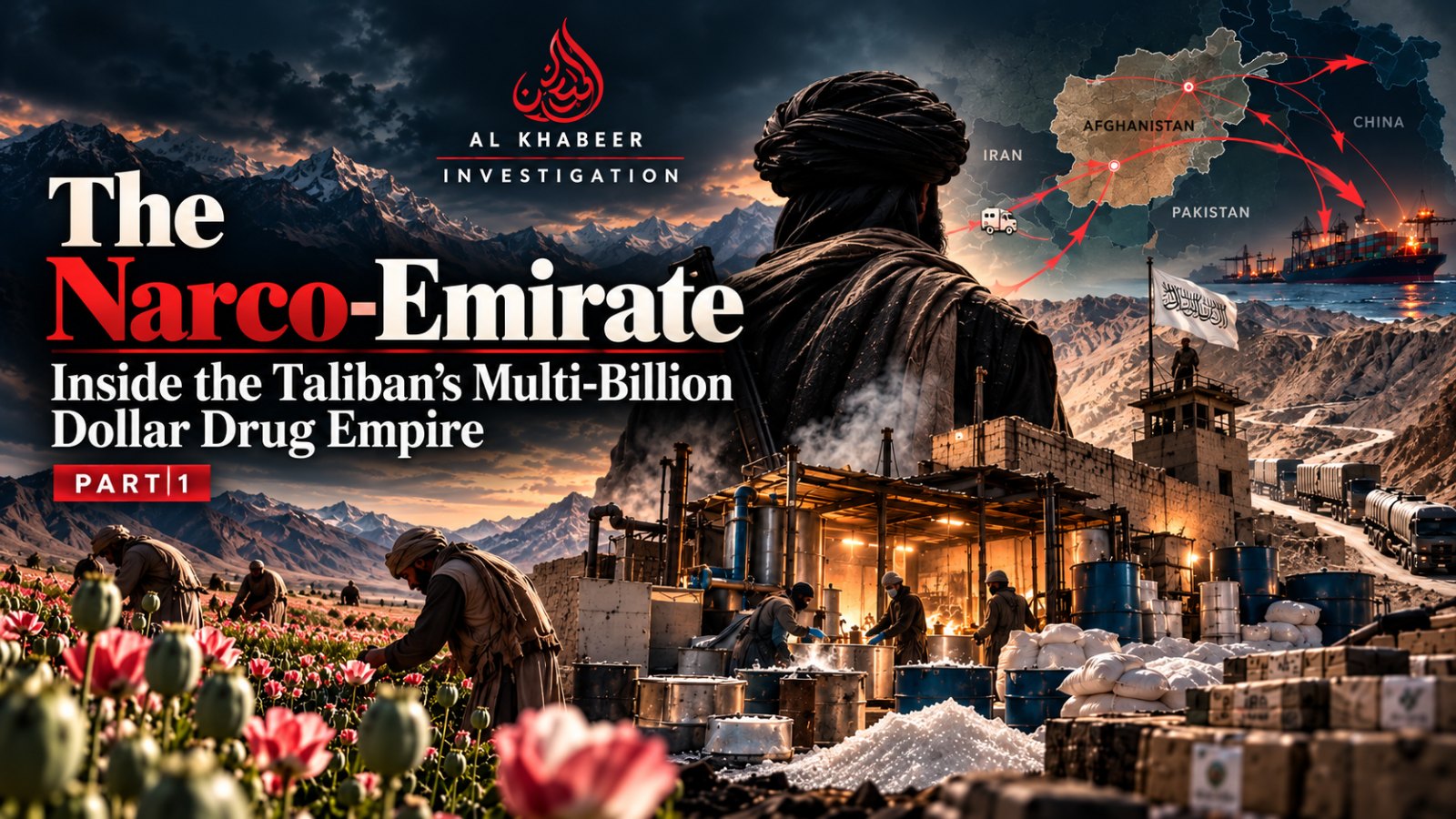
The Narco-Emirate: Inside the Taliban’s Multi-Billion Dollar Drug Empire
Behind the Taliban’s poppy ban: soaring opium prices, alleged elite stockpiles, expanding meth production and international drug trafficking.
The Taliban tell the world they have wiped out drugs. The reality is the exact opposite. When Taliban leader Haibatullah Akhundzada banned poppy farming in April 2022, foreign officials cheered. They fell for a massive scam. The decree was never about religion or stopping drugs. It was an elite market-cornering operation designed to enrich the southern Taliban mafia. By declaring the ban immediately after hoarding the massive spring 2022 harvest, the Kandahari leadership locked up 13,200 metric tons of raw opium. Behind this theatrical smoke screen, the regime built the world’s largest synthetic crystal meth cartel, weaponizing wild mountain shrubs and diverted chemicals into a multi-billion dollar criminal empire.
I. Wild Mountain Plants and Desert Meth Labs
The Taliban did not need expensive chemicals to build their new drug empire. They used what grows naturally on Afghan mountains. Across Ghor, Daykundi, and Bamyan, poor villagers harvest wild mountain bushes known as oman with hand sickles. This wild plant is packed with natural ephedrine. Truckloads of the dried plant move down Highway 1 into industrial desert labs in Bakwa in Farah province and Khash Rod in Nimroz (see Image 1). Inside these walled compounds, workers grind the plant and mix it with battery acid, caustic soda, and phosphorus to cook cheap crystal meth. The Taliban turned Afghanistan into a global discount factory for synthetic drugs.
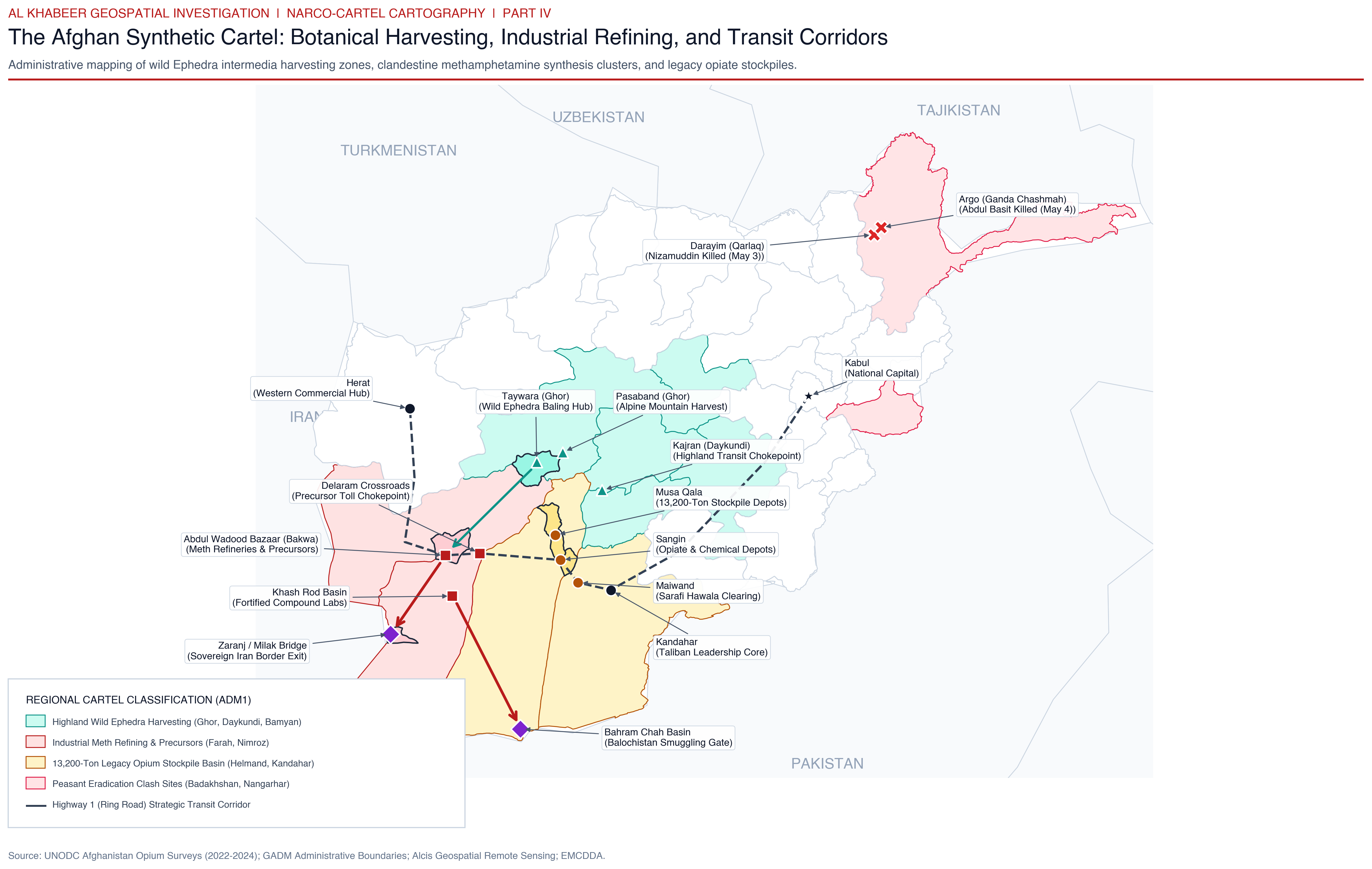
Image 1: Tactical geospatial intelligence map documenting the complete Afghan synthetic cartel pipeline: highland wild ephedra harvesting nodes across Ghor, Daykundi, and Bamyan; industrial refining basins in Farah and Nimroz; southern legacy opiate stockpiles in Helmand and Kandahar; sovereign border transit corridors into Iran and Pakistan; and lethal peasant suppression flashpoints in Badakhshan and Nangarhar. Source: Al Khabeer Geospatial Intelligence Desk / Open-Source Satellite Forensics
II. The 8.58-Billion-Dollar Opium Monopoly
The money behind the poppy ban reveals the real crime. The Taliban wiped out 95 percent of active poppy fields, dropping cultivation from 232,000 hectares to just 10,800 hectares. This created an immediate shortage. As a result, wholesale opium prices exploded by 750 percent, shooting from 100 dollars to over 750 dollars a kilo, and topping 1,100 dollars along the southern border (see Image 2). UN reports show that 60 percent of the country's 13,200 tons of stored opium was held by top Taliban commanders and their business partners. Stored in guarded desert compounds, this stockpile jumped in value from 1.32 billion dollars to nearly 10 billion dollars. The ban handed an 8.58-billion-dollar profit directly to the Kandahar leadership.
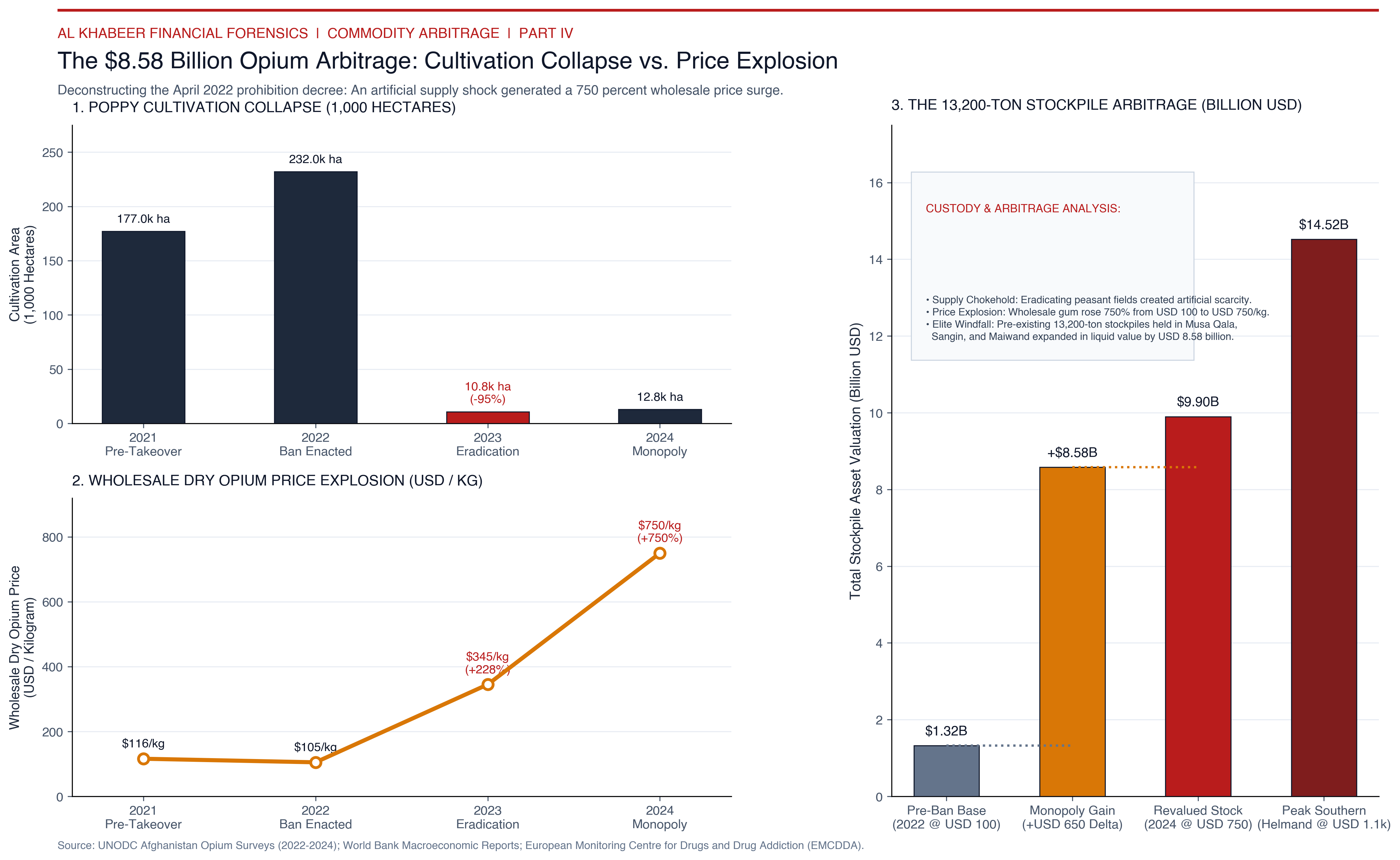
Image 2: Statistical analysis of the Taliban opiate arbitrage based on UNODC Opium Surveys: Left panel displays the 95 percent cultivation collapse from 232,000 hectares to 10,800 hectares paired with the 750 percent wholesale price surge; Right panel documents the revaluation of the 13,200-metric-ton legacy opiate stockpile from 1.32 billion dollars to 9.90 billion dollars, generating an 8.58-billion-dollar windfall for the Taliban elite. Source: UNODC Afghanistan Opium Surveys 2022-2024 / Al Khabeer Threat Finance Desk
III. Killing Poor Farmers to Protect Drug Wealth
The cruelty of the Taliban policy was exposed in the northern mountains of Badakhshan in May 2024. While southern Taliban commanders protected their giant drug stockpiles, they sent armed squads to bulldoze the tiny fields of starving northern families. When farmers fought back to protect their food, the Taliban opened fire. On May 3, Taliban fighters shot dead local farmer Nizamuddin in Darayim district. The next day in Argo district, they killed 23-year-old farmer Abdul Basit in cold blood (geolocated on Image 1). Enraged villagers carried the bodies through the streets, protesting against southern rule. The regime shoots poor northern farmers for cameras while guarding billions of dollars in drug profits in the south.
IV. Flooding Regional Borders and Ports
The scale of the Taliban meth trade is proven by police seizures outside Afghanistan. In Turkey, police seized 21.9 tons of meth in 2023, where meth has now overtaken heroin as the number one drug on the street (see Image 3). On the western border, Iranian guards caught 2,400 kilos of Afghan meth hidden inside fuel tankers. To the south, smuggling rings use regional ports to reach global buyers. In August, a joint operation by the US DEA, Pakistan Anti-Narcotics Force, and Sri Lankan police seized 463 kilos of Afghan meth worth 21 million dollars, hidden inside cargo shipped from Karachi to Colombo. From the Indian Ocean to Europe, Afghan meth is pouring into foreign markets.
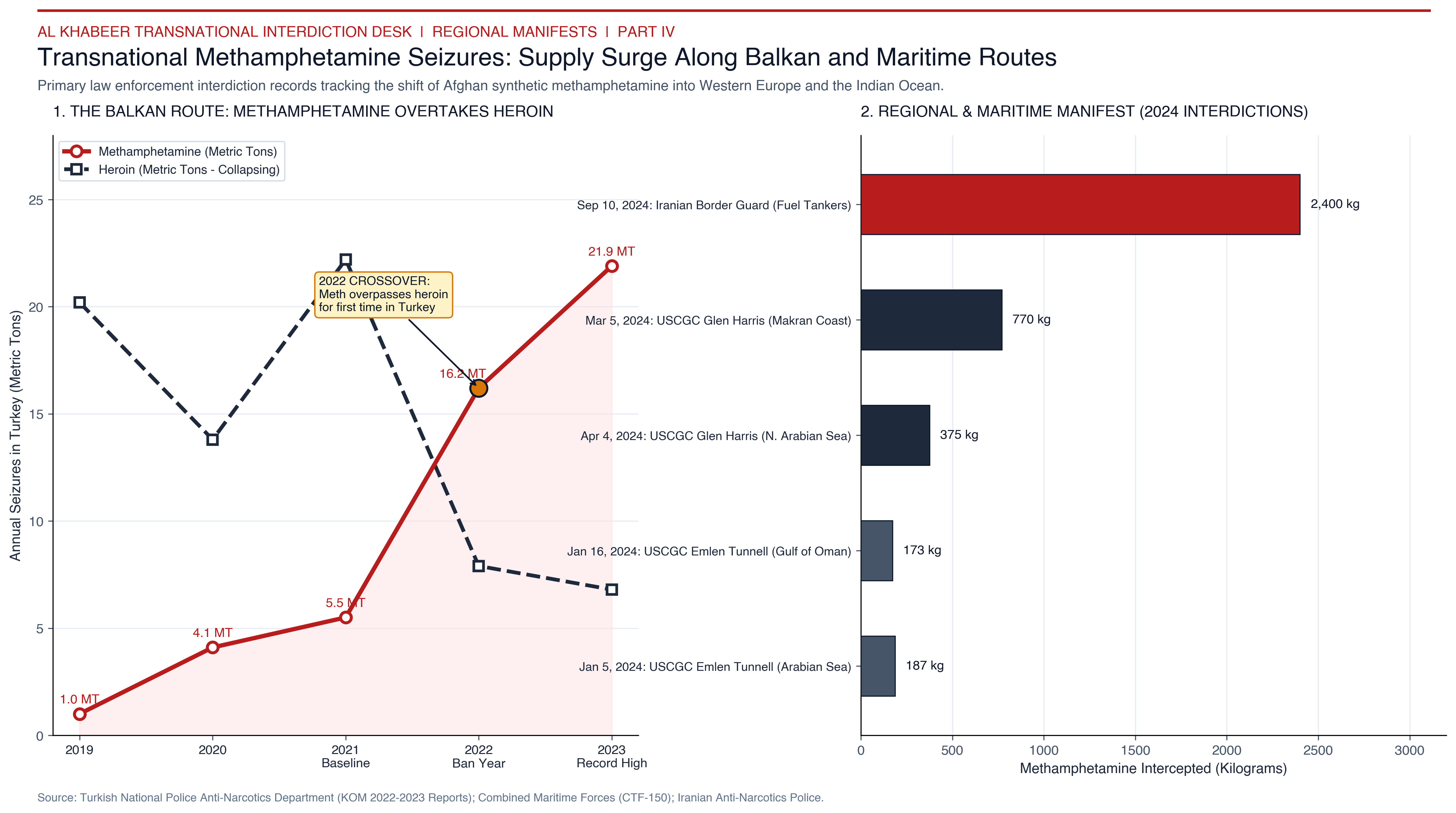
Image 3: Official law enforcement seizure manifests tracking the international surge of Afghan synthetic methamphetamine: Left panel displays Turkish National Police (KOM) interdictions skyrocketing to 21.9 metric tons in 2023; Right panel tracks maritime and land border interdictions. Source: Turkish KOM / Combined Maritime Forces (CTF-150) / UNODC / US DEA
V. A Criminal Mafia Running a State
This drug trade is not run by rogue smugglers. It is run by the Taliban government. The regime charges a 10 percent Islamic tax on every bag of wild ephedra harvested. It collects cash tolls on every drug truck passing highway checkpoints. It uses its intelligence agency, the GDI, to collect protection money from lab owners. The operation is directed by senior regime figures who built their careers on drug trafficking. These include US Treasury sanctioned drug kingpin Mullah Mohammad Naim Barich, Deputy Interior Minister Ibrahim Sadr, and Deputy Defense Minister Abdul Qayyum Zakir. The Taliban did not end the drug trade. They killed poor farmers, took over the opium market, and built a global meth cartel to fund their regime.
Follow Al Khabeer
Independent reporting on Afghanistan. Follow our work on social media for the latest news, fact checks and analysis.