The GDI’s Dirty War: How the Taliban Weaponize ISKP Against Afghanistan’s Resistance
An investigation examines that the Taliban’s GDI used ISKP attacks and delayed claims to frame Afghanistan’s resistance.
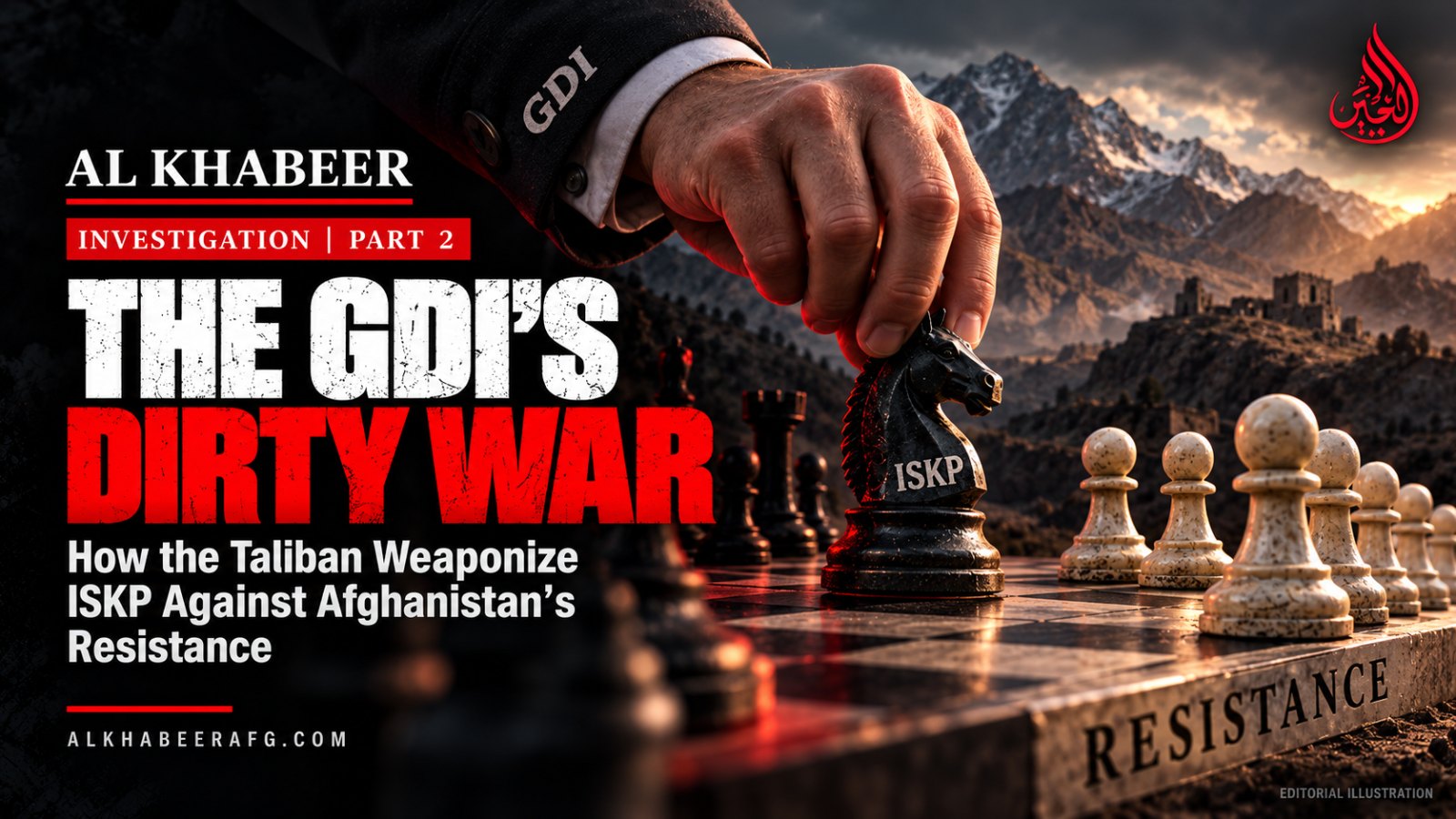
In Northern Afghanistan, particularly Badakhshan, the Afghan Taliban and their General Directorate of Intelligence (GDI) run a lethal double game. Kandahar contracts Islamic State Khorasan Province (ISKP) as hired hitmen to eliminate targets on the National Resistance Front (NRF) hit list and purge local rivals. Exploiting communication blackouts between isolated mountain fighters and exiled resistance media, the Taliban use ISKP to trigger premature resistance claims, followed by ISKP's standard 12 to 48 hour claim release. Taliban spokespersons Zabihullah Mujahid, Abdul Mateen Qani, and Hamdullah Fitrat then weaponize these dual claims alongside GDI outlet Al-Mirsad to frame ISKP and the resistance as brothers, concealing the reality that the Taliban hired the killers.
I. ISKP as the GDI’s Dirty Workers and Taliban Spokesperson Lies in Badakhshan
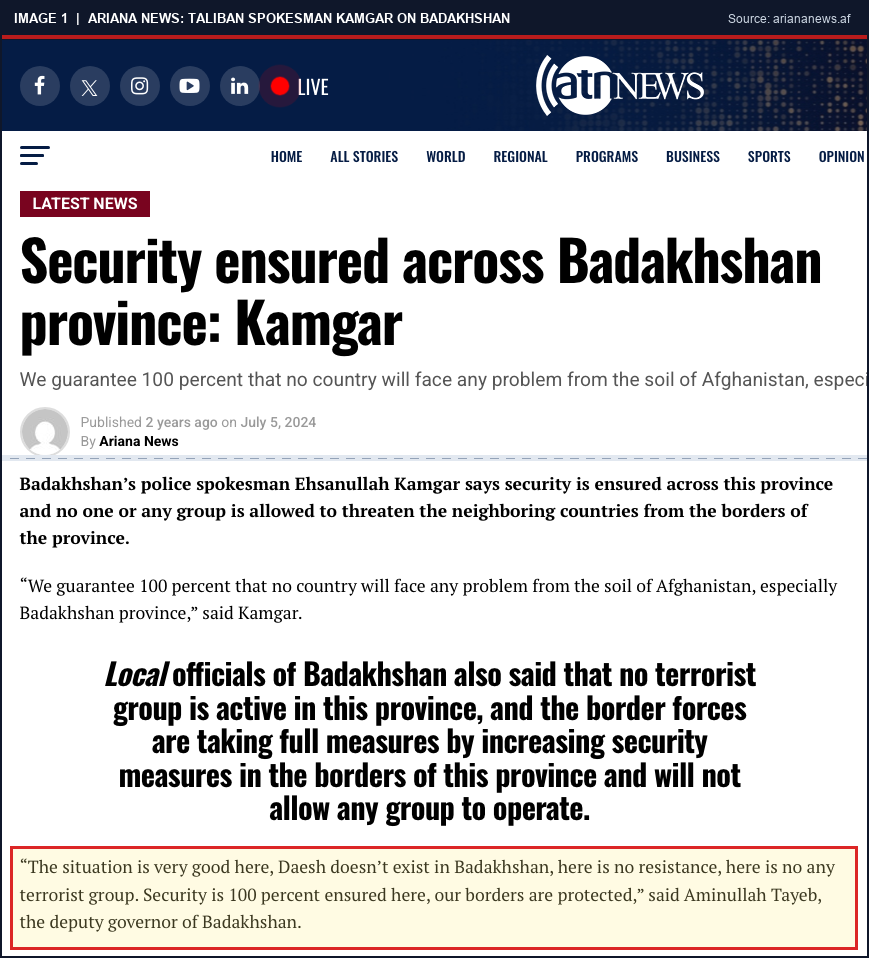
Taliban spokespersons repeatedly lie to foreign diplomats about northern security. Speaking to Ariana News (see Image 1), Badakhshan police spokesman Ehsanullah Kamgar claimed: “Daesh doesn’t exist in Badakhshan, here is no resistance... Security is 100 percent ensured here.” Chief spokesman Zabihullah Mujahid echoed this lie to Iraf on August 13, 2026, claiming “Badakhshan is calm,” while telling Deutsche Welle that local resistance in Yaftal was a foreign “conspiracy” entering through Chitral, the exact talking point used to dismiss ISKP. (Ariana News / Afghanistan International).
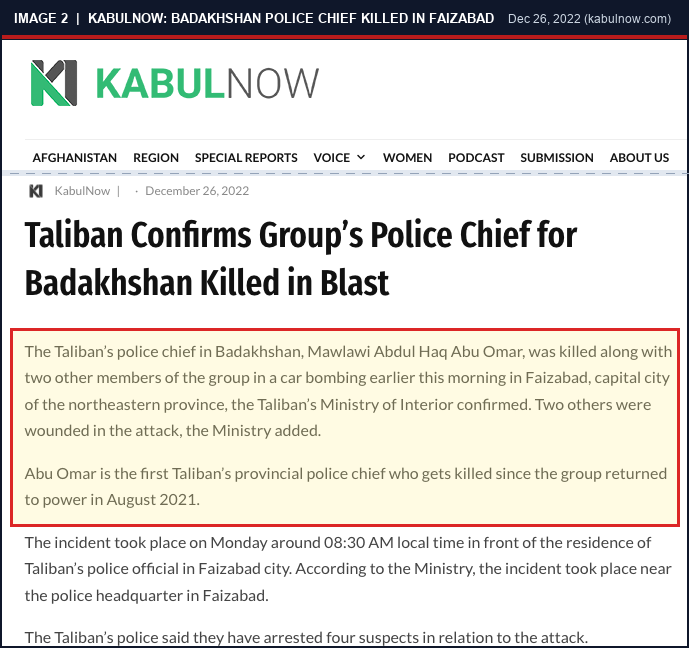
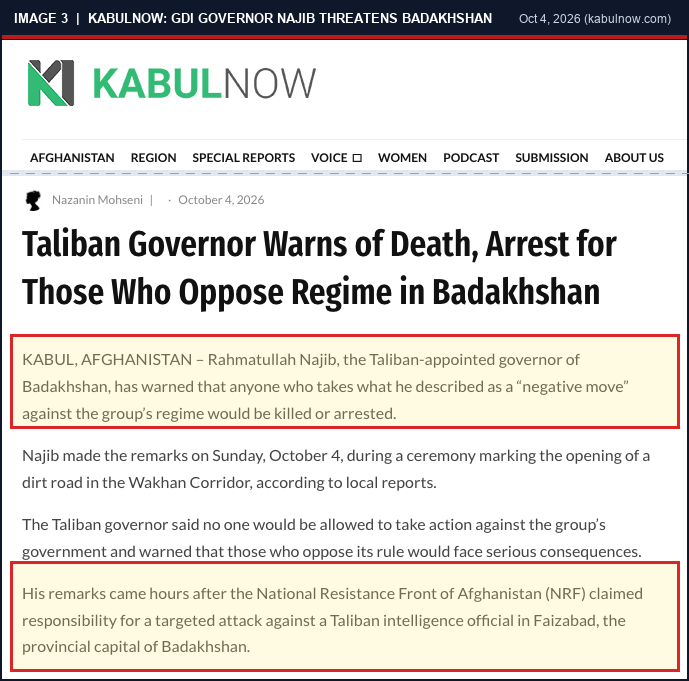
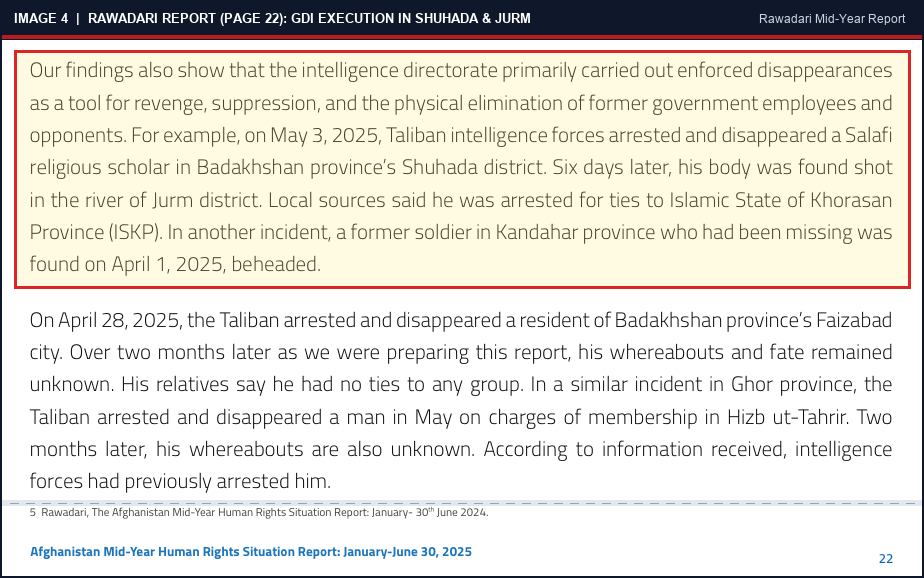
In reality, ISKP operates as the GDI’s hired assassination squad. Whenever Kandahar wants rivals removed without Taliban fingerprints, ISKP cells strike. Between December 2022 and June 2023, three Faizabad bombings eliminated native Tajik leaders resisting Kandahar's resource theft: Police Chief Mawlawi Abdul Haq Abu Omar on December 26, 2022 (see Image 2), Acting Governor Nisar Ahmad Ahmadi on June 6, 2023, and Commander Safiullah Samim on June 8, 2023. After purging commander Juma Khan Fateh in Nusay, the Taliban installed former GDI Second Deputy Director Mullah Rahmatullah Najib as governor, who threatened locals with “death or arrest” (see Image 3). Page 22 of the Rawadari Report (see Image 4) confirms GDI units in Shuhada execute locals on fabricated “ISKP ties” charges, dumping bodies into the Jurm river. (KabulNow / Rawadari).
II. The NRF Hit-List Trap in Faizabad: How the Taliban Hire ISKP and Exploit Resistance Miscommunication
To hide their alliance with ISKP, the Taliban run a calculated trap in Badakhshan. The GDI takes names directly from the NRF hit list and hands those contracts to their hired ISKP operatives. When ISKP assassinates the target, the NRF media team, disconnected from isolated mountain cells by severe ground communication lag, mistakenly assumes its own guerrilla units carried out the hit and claims the attack.
The second half of the trap relies on ISKP’s standard operational timeline. Amaq routinely takes 12 to 48 hours to publish attack claims. When ISKP inevitably releases its claim a day later, the Taliban immediately seize the opportunity to brand the NRF and ISKP as “brothers” conducting joint operations.
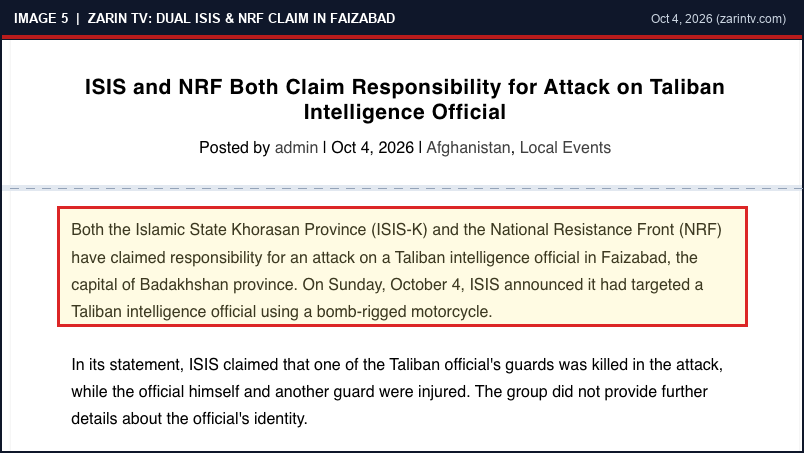
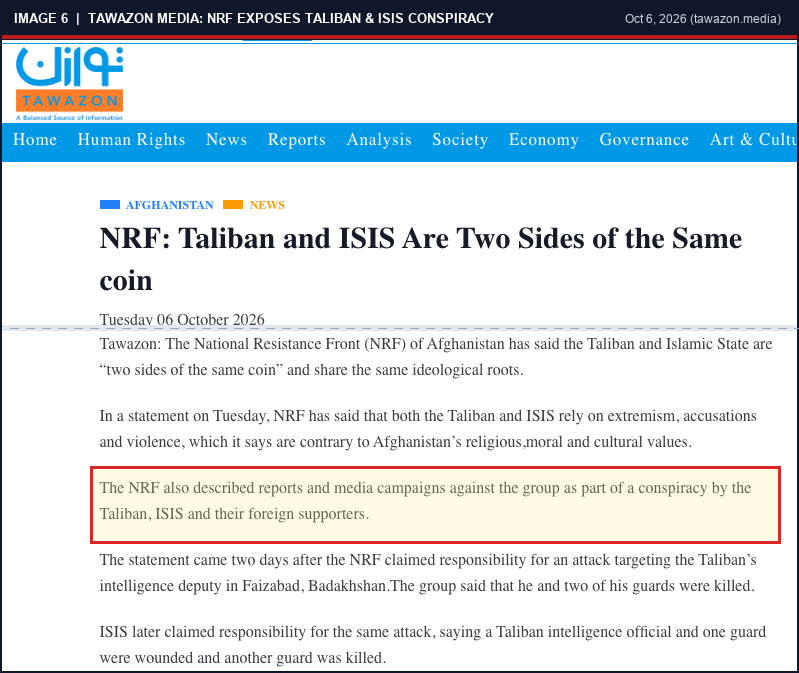
This exact deception occurred on October 4, 2026, in Faizabad's PD6. A bomb hit GDI official Safiullah Mutawakkil, a prominent name on the NRF hit list (see Image 3). Suffering from miscommunication with its ground forces, NRF media immediately claimed the strike. Roughly 12 to 15 hours later, ISKP released its routine claim for the blast (see Image 5). Taliban intelligence channels pounced, declaring the resistance and ISIS united. On October 6, 2026, the NRF exposed this setup in Tawazon Media (see Image 6), condemning it as a coordinated “conspiracy by the Taliban, ISIS and their foreign supporters.” In truth, the Taliban hired ISKP to execute the hit, then weaponized ISKP's reporting delay to frame the resistance. (Zarin TV / Tawazon Media).
III. Taliban Spokespersons and Al-Mirsad: The “Brothers” Propaganda Campaign
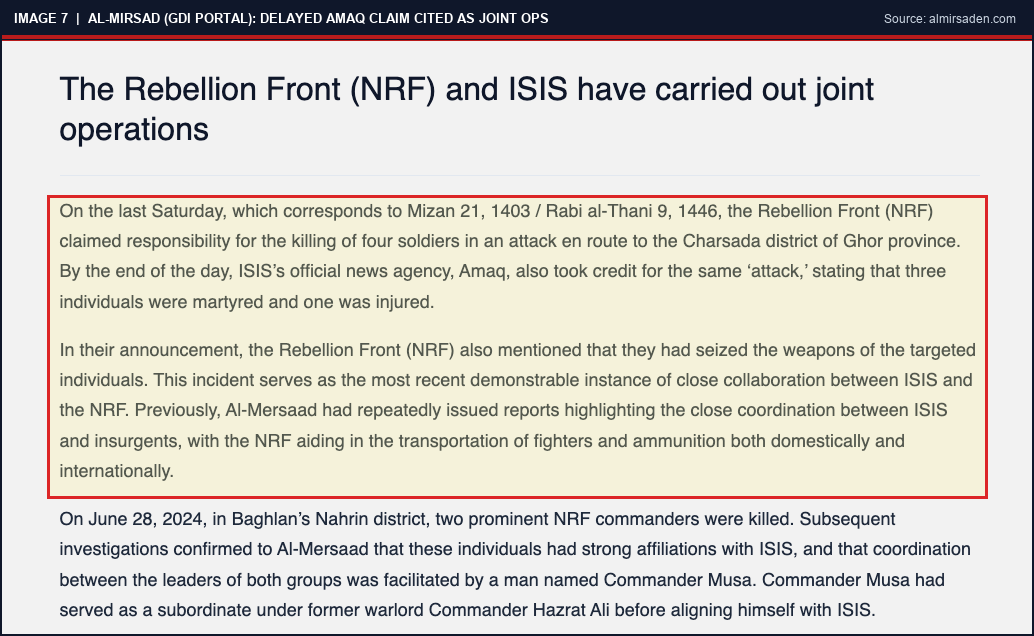
Taliban statements and GDI articles on Al-Mirsad (almirsaden.com) prove this setup is designed to feed Kandahar’s propaganda machine. In “The Rebellion Front (NRF) and ISIS have carried out joint operations” (see Image 7), the GDI cites an NRF claim followed “by the end of the day” by an Amaq claim as evidence of collaboration, while smearing resistance commanders killed in Nahrin on June 28, 2024, as ISIS operatives. (Al-Mirsad).
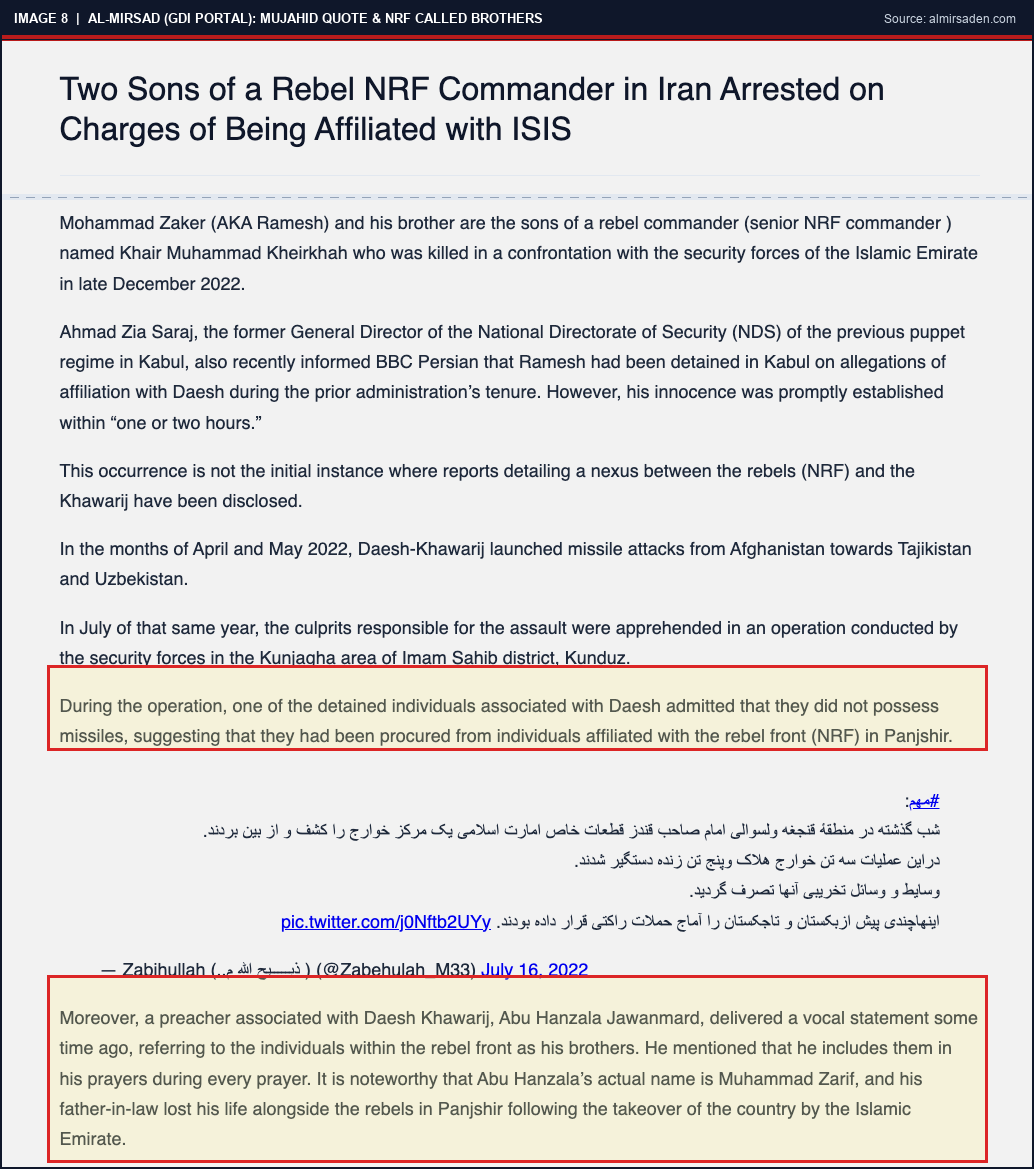
In “Two Sons of a Rebel NRF Commander in Iran Arrested” (see Image 8), the GDI embeds spokesman Zabihullah Mujahid’s Kunduz statement to claim ISKP procured rockets from Panjshir. Smearing the sons of martyred commander Khair Mohammad Kheirkhah, despite former NDS chief Ahmad Zia Saraj confirming to BBC Persian their innocence within two hours, the GDI quotes Daesh cleric Abu Hanzala Jawanmard calling resistance fighters “his brothers” (see Image 8). The reality is devastating for the Taliban: Kandahar hires ISKP hitmen to murder figures on the NRF hit list, relies on resistance communication lag to trigger overlapping claims, and manufactures a fake brotherhood to deceive the world. (Al-Mirsad).
Follow Al Khabeer
Independent reporting on Afghanistan. Follow our work on social media for the latest news, fact checks and analysis.