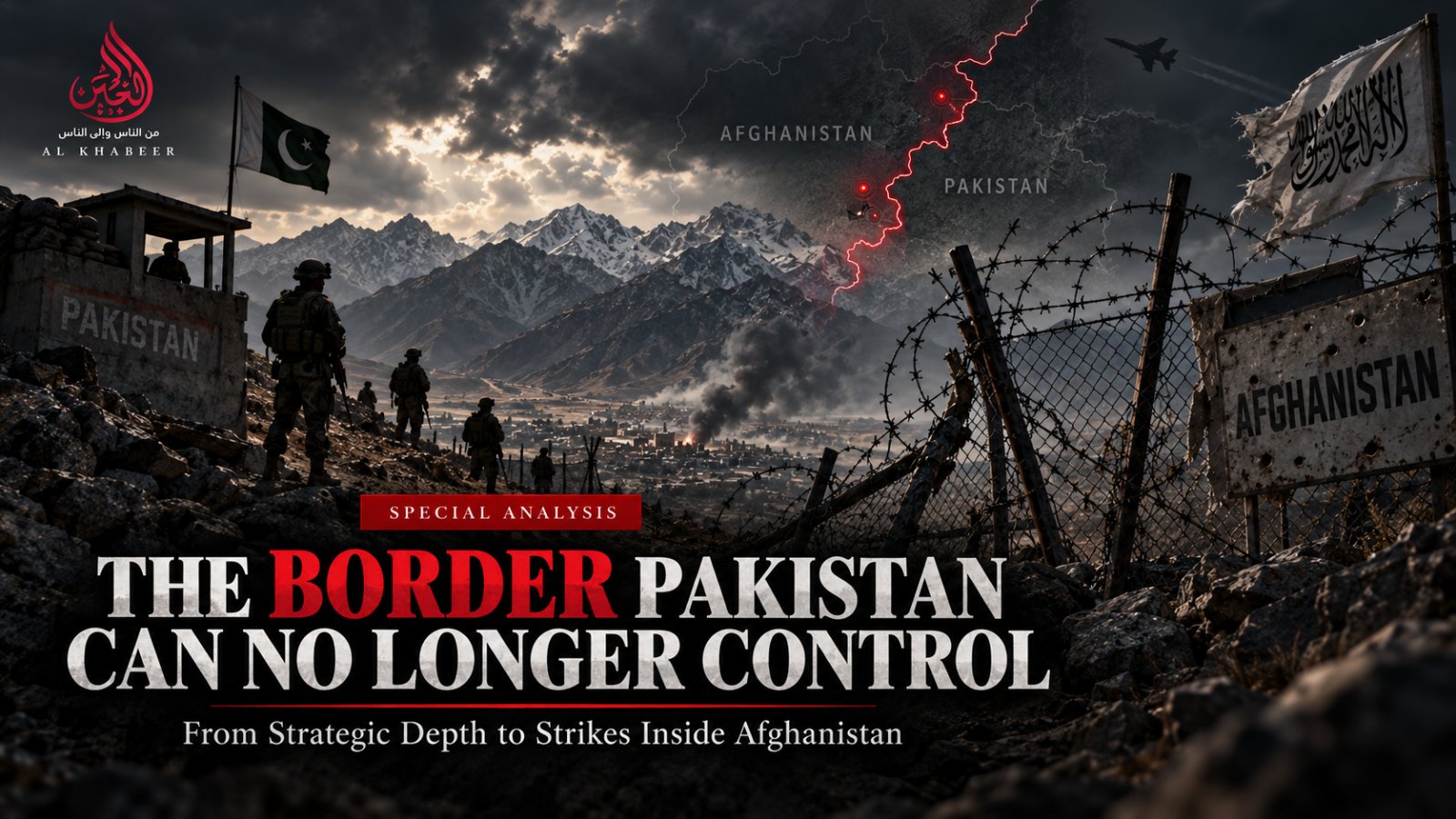
The Border Pakistan Can No Longer Control: From Strategic Depth to Strikes Inside Afghanistan
Pakistan’s decades-long pursuit of strategic depth in Afghanistan has ended in border insecurity, TTP violence and repeated strikes inside Afghanistan.
For four decades, Pakistan tried to shape Afghanistan into a strategic buffer on its western frontier. The objective was straightforward: prevent Kabul from becoming hostile, deny India strategic space in Afghanistan, and ensure that Pakistan did not have to confront serious pressure on two borders at once.
That calculation now stands confronted by an entirely different reality.
Pakistan has fenced the frontier, reinforced military positions, fought an expanding insurgency at home, and repeatedly carried out strikes inside Afghanistan. The territory Pakistani strategists once viewed through the language of 'strategic depth' has instead become an active security theatre. The irony is difficult to miss. Pakistan spent decades attempting to control the strategic environment beyond the Durand Line. Today, it is struggling to control what crosses back over it.
The Doctrine That Was Supposed to Secure Pakistan’s Western Flank
Pakistan’s pursuit of influence in Afghanistan was never merely about relations with Kabul. It was tied to a broader strategic calculation centred on India, territorial vulnerability, and the fear of encirclement.
That approach developed through the era of General Zia-ul-Haq and later military thinking associated with figures such as Mirza Aslam Beg and Hamid Gul. Afghanistan was increasingly treated not simply as a neighbouring state, but as strategic space that Pakistan believed it could shape in accordance with its own security requirements. For years, relationships with Islamist armed movements were part of that policy environment.
Then came August 2021. When the Taliban returned to Kabul, the moment was widely interpreted as a major shift in Pakistan’s regional position. The image of then-ISI chief Lt. Gen. Faiz Hameed drinking tea at Kabul’s Serena Hotel became symbolic precisely because it projected confidence: 'Don’t worry. Everything will be okay.'
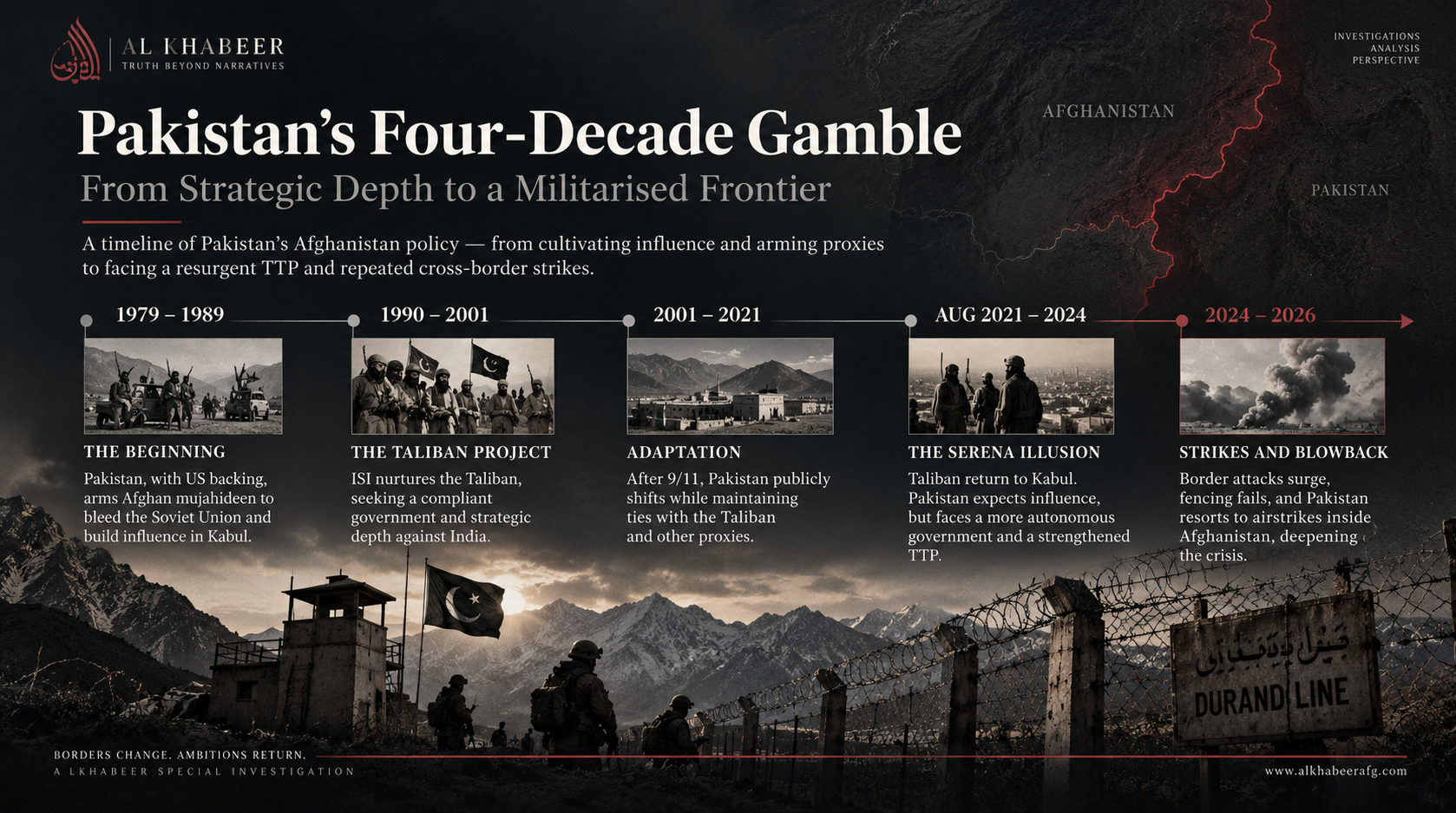
FIGURE 1: Strategic Encirclement Timeline (1979–2026).
The security trajectory that followed was far more complicated. The Taliban government did not simply become an extension of Pakistani policy. Disputes over the Durand Line persisted. Border fencing became a source of confrontation. And, most importantly for Islamabad, the TTP problem expanded instead of disappearing.
Pakistan expected influence. It encountered autonomy. It expected strategic depth. It found another contested frontier.
The Half-Billion-Dollar Fence and the Limits of Physical Control
Pakistan then tried to impose physical control on a frontier that had resisted political control. Between 2017 and 2023, Pakistan spent more than $530 million constructing approximately 2,640 kilometres of fencing, supported by hundreds of border posts and forts. The logic was simple: if political influence could not completely regulate movement across the frontier, barriers might.
Geography, tribal movement, and recurring confrontation complicated that assumption. The border cuts through some of the most difficult terrain in the region. Mountain ridges, valleys, historical routes, and communities divided by the Durand Line make complete physical control extraordinarily difficult. Repeated fence disputes and confrontations with Afghan Taliban forces resulted in sections of the barrier being damaged or removed in several frontier areas.
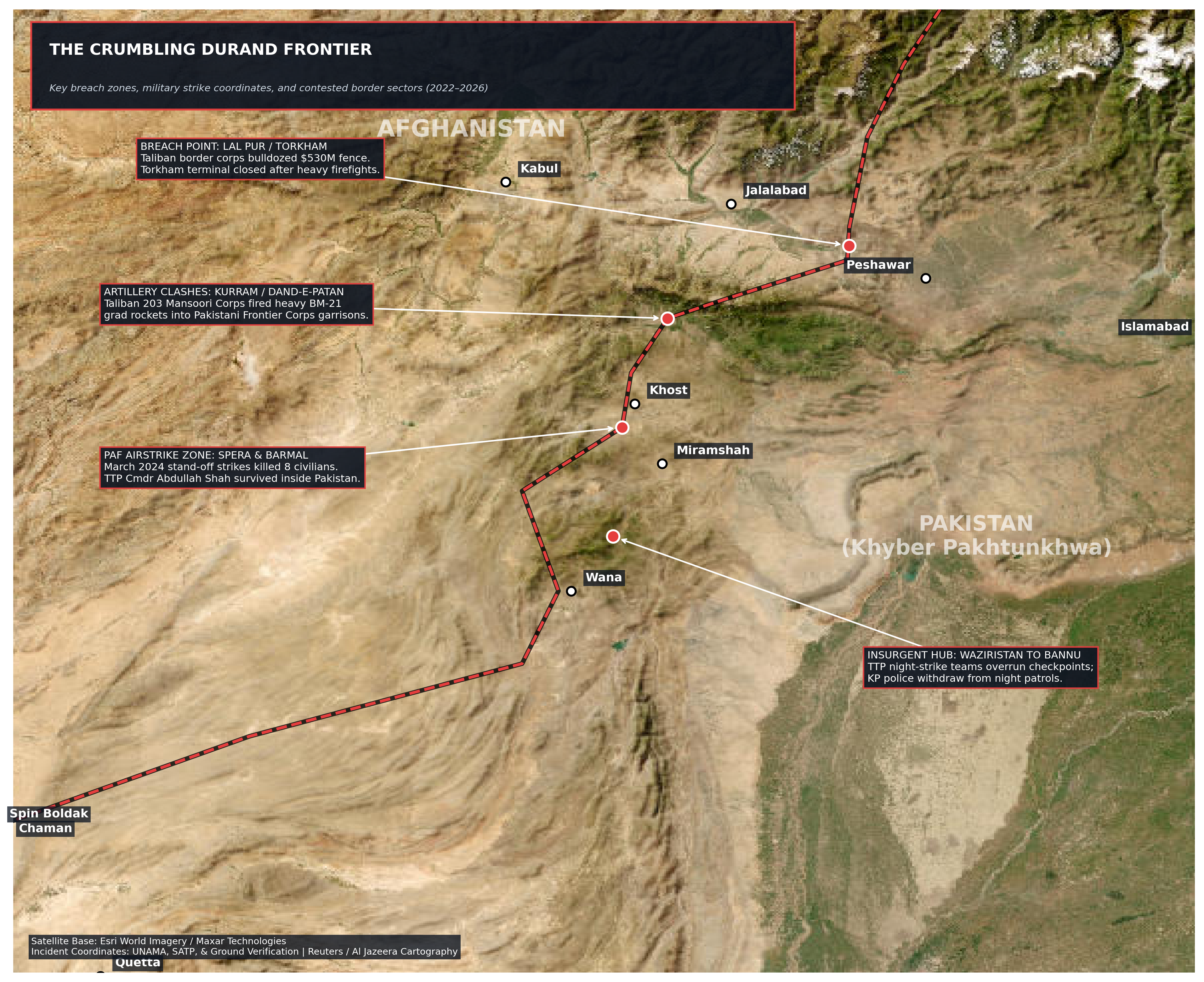 FIGURE 2: Tactical Satellite Audit of the Durand Frontier. Multi-tile satellite cartography displaying active breach sectors, bulldozed fences, and cross-border kinetic clash corridors.
Pakistan attempted to turn one of South Asia’s most politically contested frontiers into a controlled security boundary. Yet the principal security threat Islamabad now identifies from that frontier was not stopped by wire.
The fence remained. The insurgency crossed it anyway.
The Assumption That the Two Taliban Could Be Kept Separate
Pakistan’s most consequential miscalculation may have been the belief that its relationship with the Afghan Taliban could be kept strategically separate from the challenge posed by the Pakistani Taliban.
The two organisations are not identical. They have different leadership structures, operational priorities, and immediate objectives. But they emerged from overlapping ideological and social environments. Networks of clerics, madrassas, tribes, commanders, and fighters have historically crossed the frontier. The distinction that looked manageable on paper became much harder to enforce once the Afghan Taliban returned to power.
Following the collapse of the former Afghan government, imprisoned militants were freed, with UN assessments documenting thousands of TTP personnel operating from Afghanistan alongside sophisticated weapons and military equipment left behind in the region.
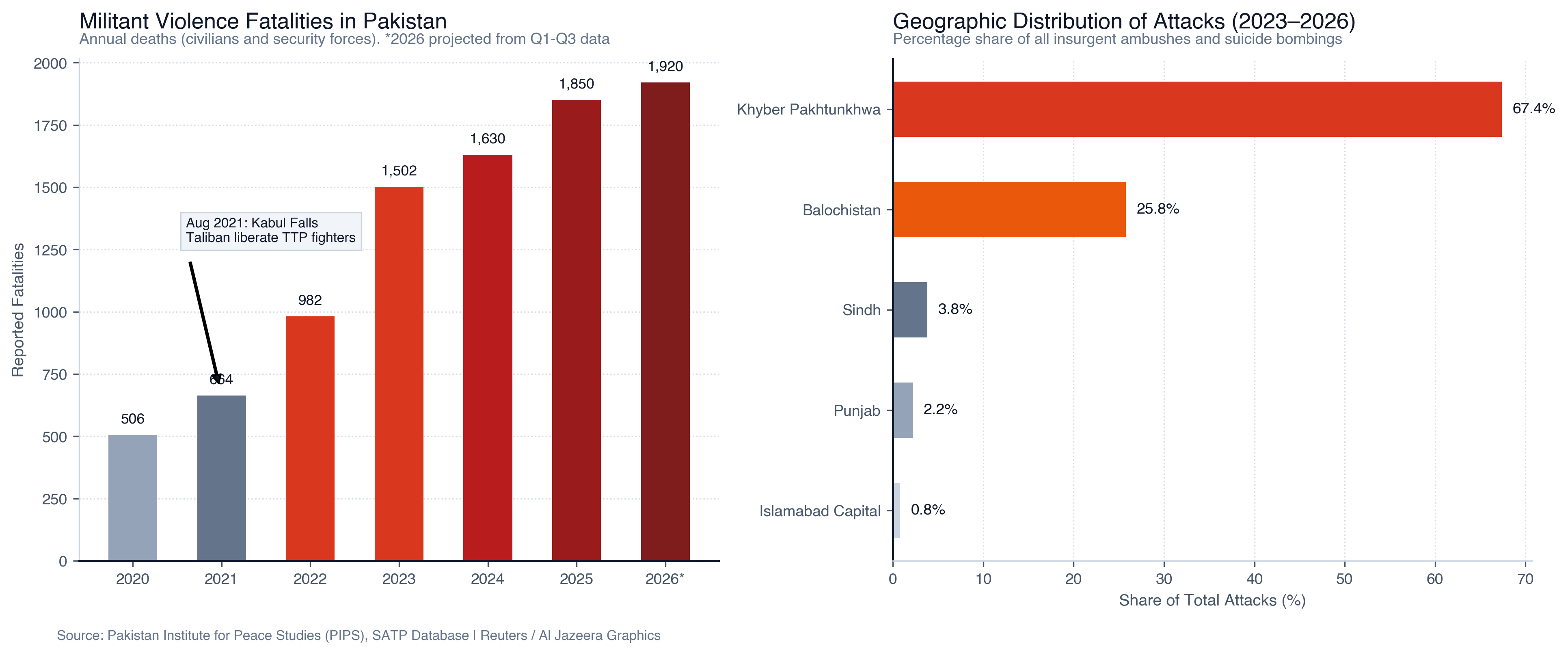
FIGURE 3: Fatalities Surge & Regional Attack Distribution (2020–2026).
For Pakistan, this created the central contradiction of the post-2021 period: the movement whose return to Kabul appeared to improve Pakistan’s regional strategic position did not eliminate the organisation now responsible for some of the most serious attacks inside Pakistan. Instead, Islamabad increasingly found itself demanding action from a government it had once expected to provide strategic reassurance.
When Influence Failed, Air Power Followed
The shift from political influence to cross-border military force is the clearest indication of how dramatically Pakistan’s Afghanistan strategy has changed. Pakistan has repeatedly carried out strikes inside Afghanistan while arguing that armed groups operating from Afghan territory pose an immediate threat.
The March 2024 strikes in Khost and Paktika became an early example of this escalation. Pakistani accounts initially linked the operation to TTP commander Abdullah Shah, while Shah subsequently appeared in a video showing he remained alive. Afghan reports recorded that women and children were killed, and Taliban forces subsequently fired on Pakistani positions.
Whatever interpretation is placed on the individual strike, the strategic transformation is unmistakable. Pakistan once sought influence inside Afghanistan to keep threats away from its western border. It now uses force inside Afghanistan because it says those threats cannot otherwise be contained.
That is not a minor tactical adjustment. It represents a fundamental reversal in the relationship between Pakistan’s original strategic objective and the security environment that ultimately emerged.
The Crisis Did Not Remain Across the Border
The consequences have also moved deep inside Pakistan. Growing violence has struck Khyber Pakhtunkhwa, with Bannu, Lakki Marwat, and Tank facing sustained militant pressure.
The security response has also generated domestic political resistance. When Operation Azm-e-Istehkam was announced in 2024, opposition emerged from political leaders, tribal representatives, and sections of the population in Khyber Pakhtunkhwa who feared another cycle of displacement and military operations. The mass mobilisation in Bannu exemplified those tensions.
Pakistan’s western crisis is no longer solely a foreign-policy problem. It sits at the intersection of Afghanistan policy, border security, terrorism, provincial politics, and public confidence in counterterrorism strategy. Across the border, Islamabad confronts Kabul over militant sanctuary. Inside Pakistan, it confronts the consequences of the insurgency itself.
From Strategic Depth to Strategic Exposure
This is where the four-decade story reaches its central contradiction. Pakistan tried to ensure that Afghanistan would never become a hostile strategic space on its western frontier. Yet Pakistan today confronts persistent militant violence originating from networks it says operate from Afghan territory.
It spent enormous resources fencing the Durand Line. The militant threat survived the fence.
It cultivated relationships intended to preserve influence in Kabul. That influence has proved insufficient to force Kabul to meet Pakistan’s demands over the TTP. And when diplomacy and pressure failed to produce the desired result, Pakistan increasingly turned to cross-border military force.
The original doctrine was supposed to reduce Pakistan’s strategic vulnerability. Instead, Pakistan now faces a heavily militarised western frontier, recurring confrontation with Kabul, and an insurgency that continues to impose serious costs inside the country.
Follow Al Khabeer
Independent reporting on Afghanistan. Follow our work on social media for the latest news, fact checks and analysis.