Ahmad Shah Massoud Fell. Afghanistan’s Fight for Freedom Did Not.
Twenty-five years after Massoud’s assassination, his unfinished struggle for a free Afghanistan still challenges Taliban rule.
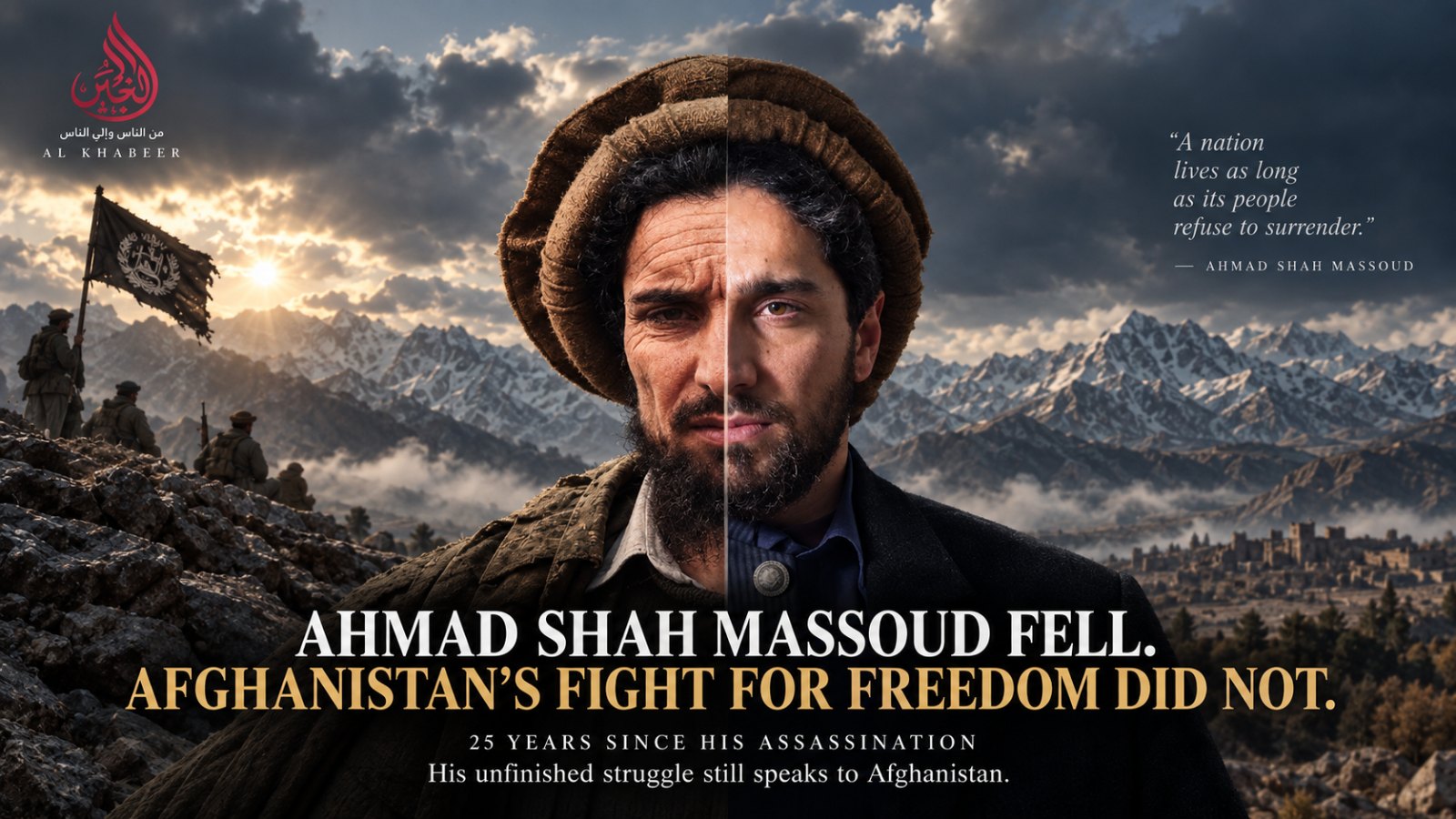
Two days before the world learned what al-Qaeda was capable of, Ahmad Shah Massoud was murdered by men posing as journalists. But the most haunting part of his final struggle was not the assassination itself. It was the question he had spent years forcing Afghanistan to confront: can an armed movement claim an entire country without ever allowing its people to choose who governs them?
In April 1992, Mohammad Najibullah’s government was collapsing, and Ahmad Shah Massoud’s forces were close enough to take Kabul.
Massoud had the military advantage. He could have tried to seize the capital and rule through force.
Instead, during a recorded radio exchange with Gulbuddin Hekmatyar, he called for a temporary political arrangement followed by elections.
Massoud said:
“The ground should be prepared for a general election,”
The date matters. This was 1992, not the final months of 2001 when Massoud was addressing European politicians and searching for international support. His argument that battlefield victory alone could not create political legitimacy appeared when he himself possessed the guns, territory and momentum to impose a different outcome.
The Emirate Massoud Refused
By the final weeks of his life, that belief had hardened into an unmistakable challenge to the Taliban.
In his final known interview, conducted in August 2001, Massoud described Taliban proposals under which both sides could retain their weapons and territories. He rejected the political price attached to them.
“We are fundamentally against the system called ‘the Emirate of Afghanistan’.”
Massoud was prepared to discuss an interim arrangement with the Taliban. What he insisted must follow was more important: a representative political process in which Afghans themselves determined the country’s government.
His challenge to the Taliban was remarkably simple: if they truly represented Afghanistan’s majority, why fear elections?
A quarter-century later, that question has not disappeared.
The Taliban recaptured Kabul in 2021. But military conquest is not the same thing as public consent.
An Islamic Vision Without One Movement Owning Islam
Massoud was not a secular politician seeking to remove Islam from Afghanistan. His political formation emerged from Afghanistan’s Islamic movement, and religion remained central to his worldview.
That makes his disagreement with the Taliban more significant.
It was not simply Islam versus secularism. It concerned whether Islam required Afghanistan to submit permanently to one emir, one movement and one interpretation of political authority.
His position on women sharpened the difference. During his April 2001 visit to Europe, Massoud publicly defended women’s education, employment and participation in rebuilding Afghanistan. In surviving archival footage, he argued that the country’s future required the participation of everyone, including women.
That statement carries a different weight today.
Under Taliban rule, Afghan girls remain excluded from secondary and higher education, while women have been pushed out of large parts of professional and public life.
Massoud’s premise was the opposite: Afghanistan could not claim national representation while excluding half of its people from its future.
One of the most remarkable pieces of Massoud’s record sits inside a declassified American intelligence document.
A declassified intelligence report states that Massoud’s intelligence network had obtained information that Osama bin Laden and al-Qaeda intended to conduct an attack against the United States on a scale greater than the 1998 embassy bombings.
Massoud carried warnings about al-Qaeda and Afghanistan’s growing terrorist sanctuary to Europe months before his death.
On 9 September 2001, two al-Qaeda terrorists posing as journalists assassinated him.
Two days later, the threat Massoud had been describing escaped Afghanistan with catastrophic consequences.
The Struggle He Left Behind
Ahmad Shah Massoud cannot return, but Afghanistan still needs the kind of courage, conviction and national vision he embodied. Today, that responsibility may fall to a new generation of resistance, and Ahmad Massoud stands in a unique position to carry forward his father’s legacy by challenging Taliban authoritarianism and keeping alive the struggle for a freer Afghanistan.
What remains unfinished is larger than one man, one valley or one family:
the principle that Afghanistan belongs neither to an emir nor to an armed faction, but to its people.
The Taliban can control ministries. They can issue decrees. They can suppress organised opposition.
But none of those things answers. Massoud’s old question:
Who gave one movement the permanent right to determine Afghanistan’s future without asking Afghanistan and its people?
Ahmad Shah Massoud fell twenty-five years ago.
Afghanistan’s fight for that freedom did not.
Follow Al Khabeer
Independent reporting on Afghanistan. Follow our work on social media for the latest news, fact checks and analysis.