The Narco-Emirate: From Chemical Tankers to Smuggling Fleets
The Taliban advertise a drug ban. Al Khabeer investigates the chemical imports, desert meth labs and sea routes behind Afghanistan's drug trade.
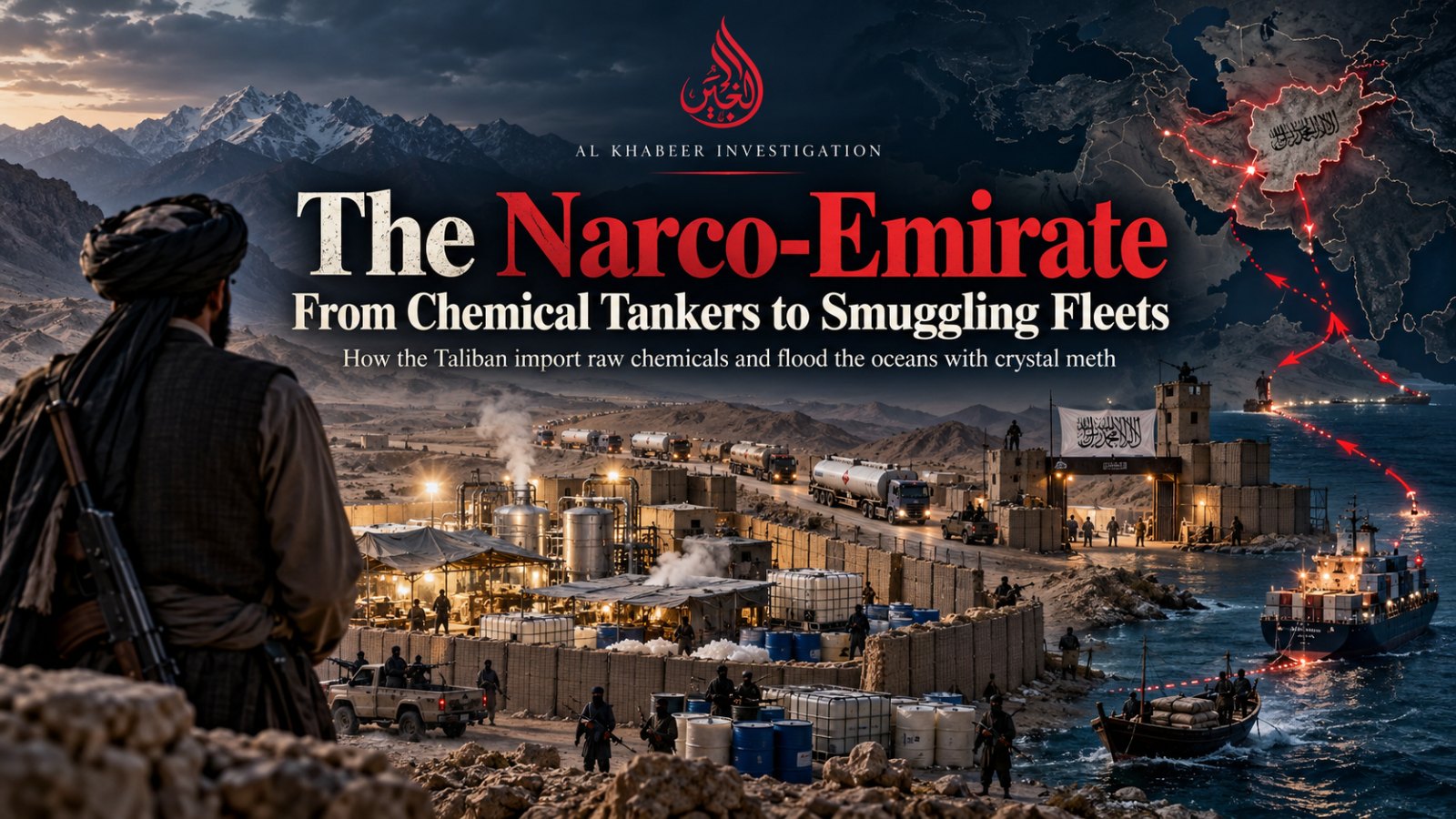
The Taliban's war on drugs is one of their biggest lies. The Taliban did not destroy the drug trade. They took it over, turned it into a business, and made it part of their rule. To fool foreign diplomats, the regime films destroyed poppy fields and claims it eradicated narcotics. That is pure deception. The Taliban punish poor farmers for growing poppies while powerful figures in Kandahar profit from the very drug trade they claim to fight. The Taliban preach religion in public while their drug business thrives behind closed doors. Kandahar's rulers have turned the drug trade into a powerful criminal empire, replacing opium fields with industrial chemical labs and flooding world oceans with crystal meth.
I. The Inbound Highway: Foreign Chemicals at State Customs
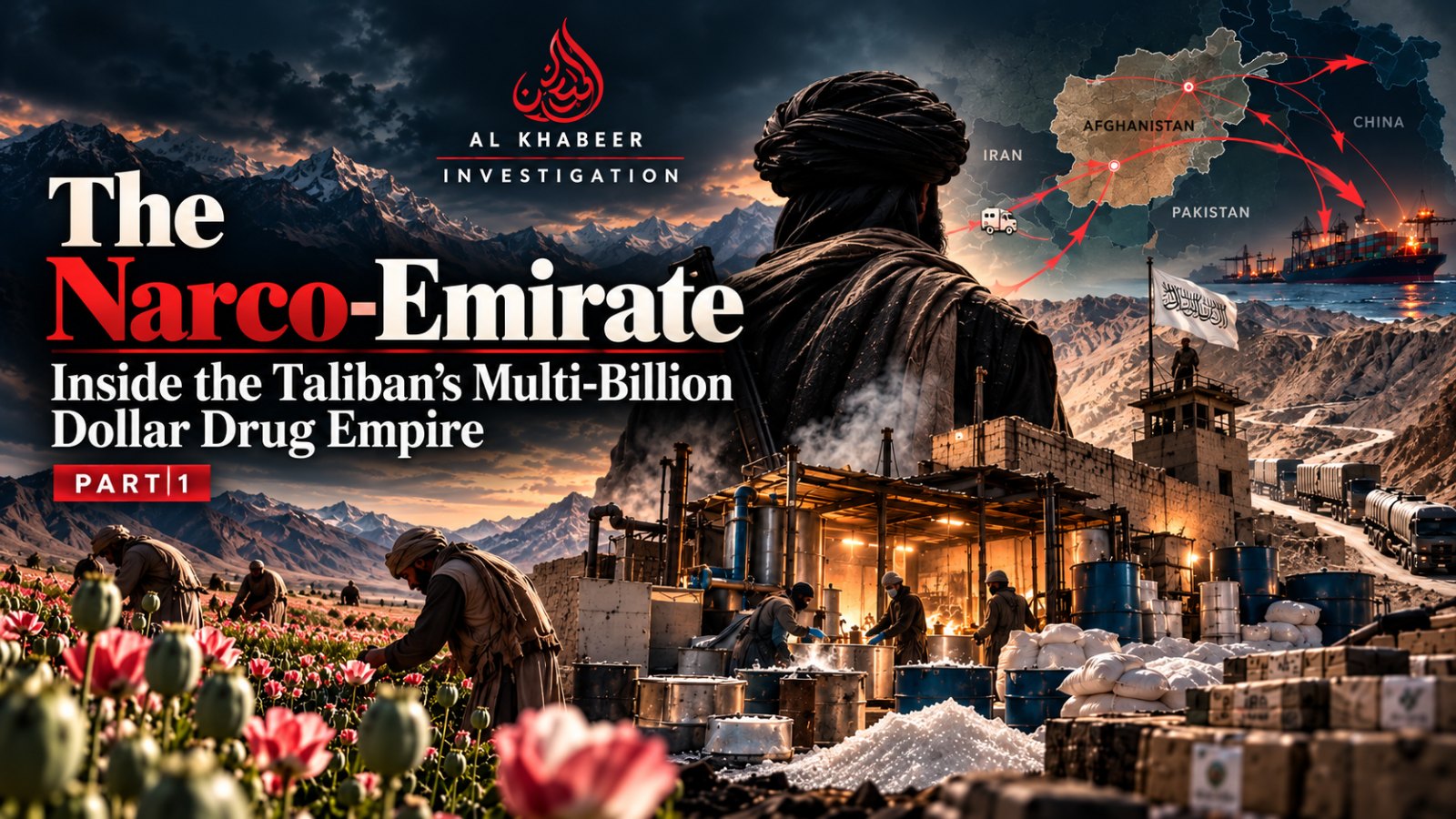
Making crystal meth requires industrial chemicals: caustic soda, battery acid, acetone, industrial acid, iodine, and red phosphorus, alongside bulk ephedrine. Afghanistan produces none of these chemicals. Every barrel is imported. These chemicals do not slip across mountain footpaths. They roll through official border gates in commercial tankers directly into Taliban hands: Hairatan from Uzbekistan, Islam Qala from Iran, and Torkham and Chaman from Pakistan (mapped on Image 1). Taliban customs officers inspect manifests, stamp paperwork, and collect millions in taxes. Sirajuddin Haqqani's Interior Ministry and intelligence gunmen escort these convoys down Highway 1 toward southern hubs. The Taliban do not fight this drug business. They make money from it.
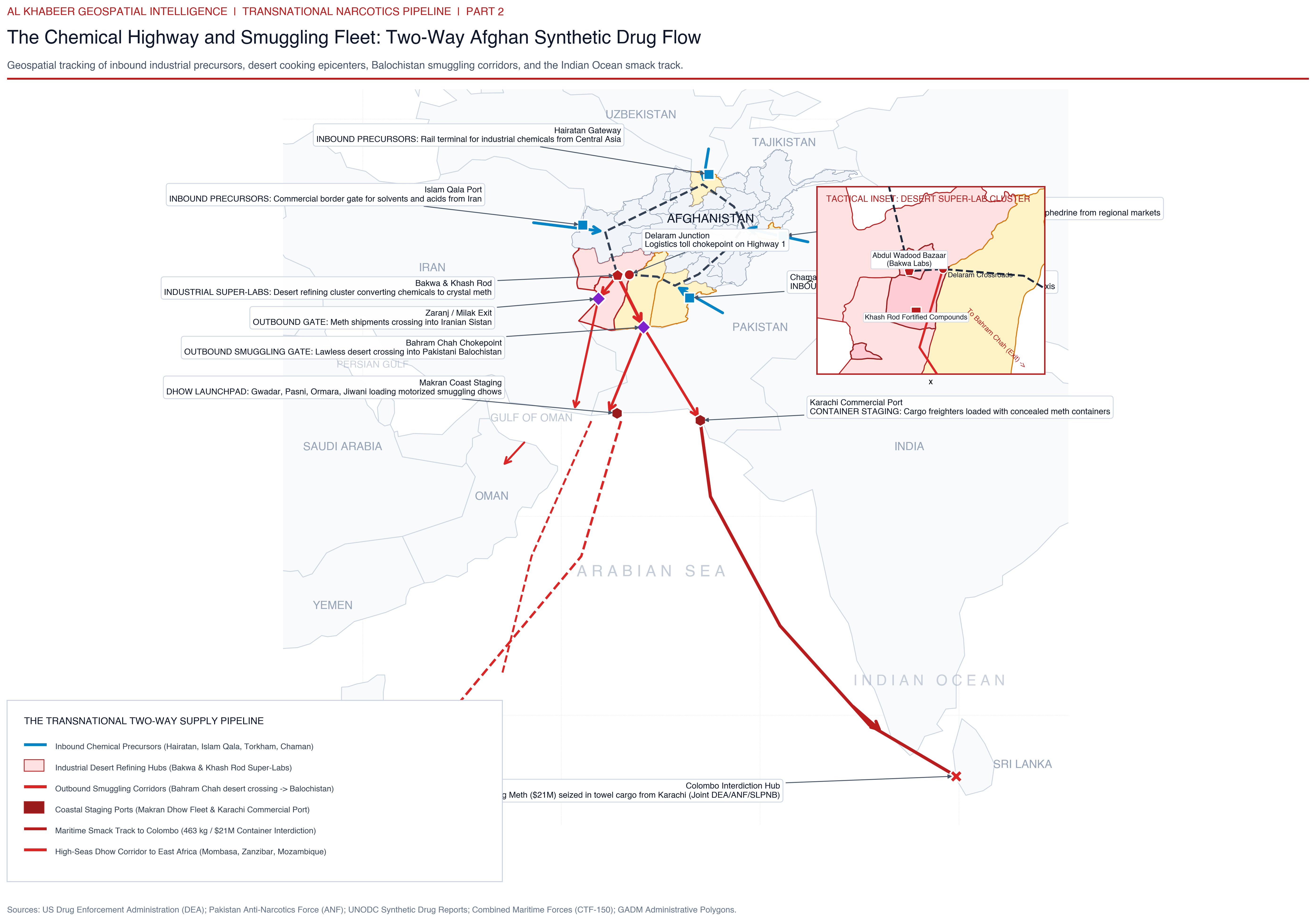
Image 1: Regional map tracking inbound chemical routes, Bakwa desert synthesis labs, Bahram Chah corridors, and maritime routes to Colombo
II. Desert Labs: Bakwa and Khash Rod Industrial Super-Labs
South of the Delaram junction, chemical convoys turn into the desert expanses of Bakwa in Farah and Khash Rod in Nimroz. Behind mud walls and armed checkpoints, the regime runs an industrial narcotics network (identified on Image 2). Hundreds of fortified laboratories operate continuously. Workers boil wild mountain ephedra shrubs in giant vats of imported battery acid, caustic soda, and solvents. By combining wild highland plants with imported chemicals, the Taliban built an industrial meth machine. Taliban commanders act as drug bosses, collecting their share of the profits on every chemical drum delivered and every kilogram produced.
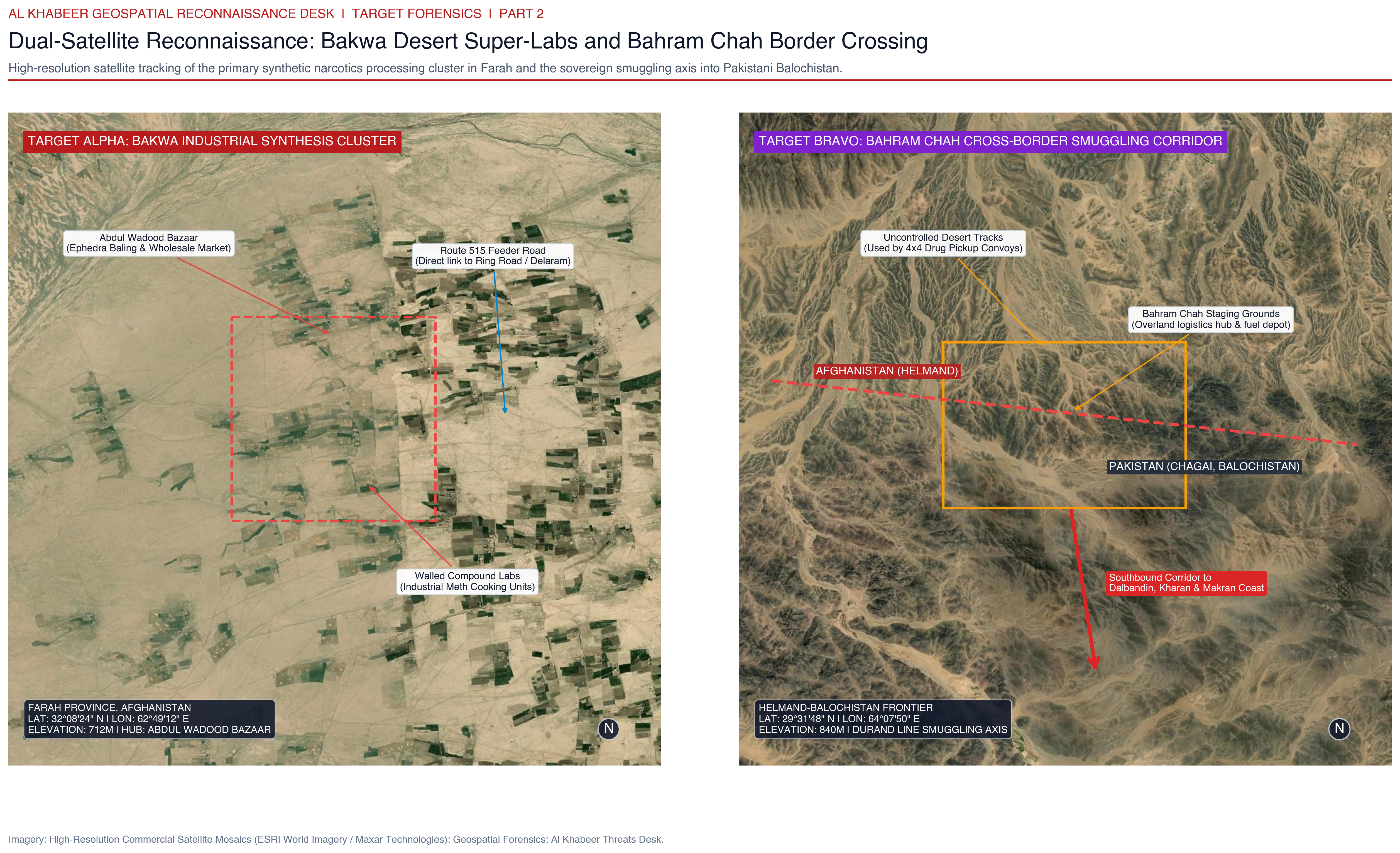
Image 2: Satellite reconnaissance of the Bakwa lab cluster (Target Alpha) and the Bahram Chah border crossing (Target Bravo). Source: ESRI / Maxar / Al Khabeer Desk
Key Threat Finding: The Taliban regime clears chemical precursors at official customs, collects state taxes, and deploys intelligence units to escort convoys down Highway 1.
III. The Southern Corridor: Bahram Chah and the Balochistan Route
Once packed, the drugs move toward foreign markets under Taliban protection. To the west, convoys cross Zaranj into Iran, hiding crystal meth inside fuel tankers. To the south lies Bahram Chah, an entrenched border crossing between Helmand and Pakistan (mapped on Image 1 and Image 2). Bahram Chah has become a major drug-smuggling centre under armed protection. Taliban fighters guard an open-air narcotics bazaar, sending fleets of pickup trucks across the Durand Line into Pakistani Balochistan. Armed smugglers race across the Chagai desert through Dalbandin, Kharan, and Panjgur, heading directly toward coastal hideouts along the Makran shore.
IV. The Ghost Fleet: Karachi Port, Dhows, and the $21 Million Colombo Interdiction
At the coast, Taliban narcotics enter the ocean highway known as the Smack Track through two routes. The first uses motorized dhows sailing from Makran ports, including Jiwani, Gwadar, Pasni, and Ormara. These vessels turn off satellite beacons, crossing the Arabian Sea to offload tons of crystal meth across East Africa and the Gulf. The second route exploits commercial cargo ships. Smugglers conceal crystal meth inside containers at Karachi Port. On August 30, 2024, a joint operation by the Pakistan Anti-Narcotics Force, the US Drug Enforcement Administration, and the Sri Lanka Police seized 463 kilograms of Afghan crystal meth hidden inside export bath towels shipped from Karachi to Colombo. Worth 21 million dollars, this seizure exposed how Taliban meth floods foreign waters, linking to total regional seizures of 671 kilograms.
V. The Sovereign Cartel: An Armed Narco-State
The Taliban's drug-ban story falls apart when confronted with the evidence. A regime that profits from drugs has no right to preach morality to the world. A government cannot claim religious virtue while its customs gates clear chemical precursors, its intelligence service escorts drug shipments, and its syndicates flood world oceans with poison. The Taliban killed poor farmers over small poppy fields, then presented their crackdown as a victory in the war on drugs. Meanwhile, Kandahar's inner circle hoarded billions in raw opium stockpiles and built a massive synthetic drug cartel. The Taliban hide behind religion while chasing power and drug money. The Taliban call it an Islamic Emirate. This investigation exposes a drug empire hiding behind religion, guns, and government power. They are drug bosses with guns, a flag, and an entire government at their disposal.
Follow Al Khabeer
Independent reporting on Afghanistan. Follow our work on social media for the latest news, fact checks and analysis.