Russia's Taliban Trap: Inside Moscow's Broken Afghanistan Policy
An Al Khabeer investigation examines Russia’s unratified Taliban defense pact, Soviet-era weapons requests, Belarusian drone talks and regional security risks.
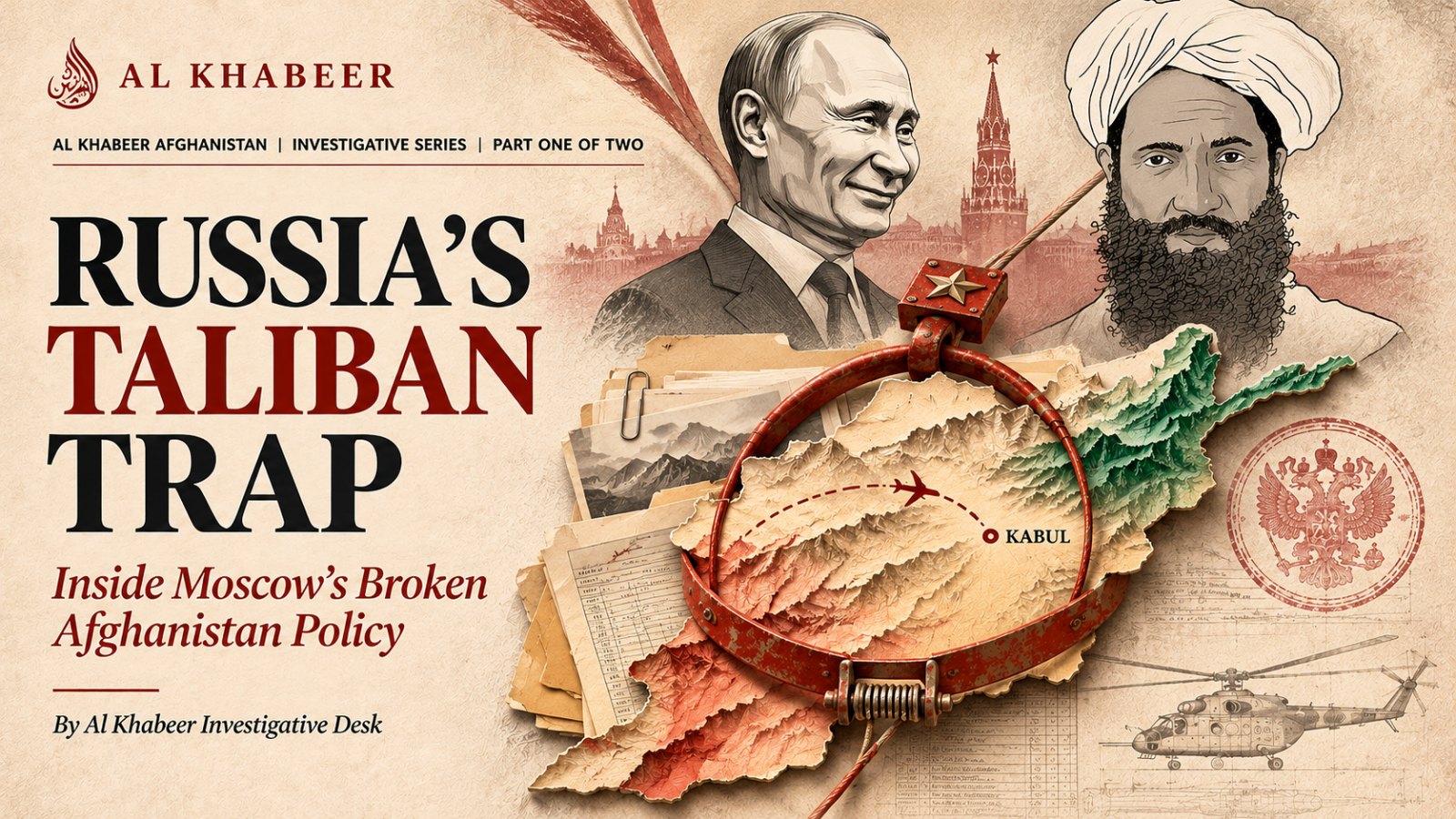
On May 27, 2026, on the margins of Moscow's 14th International Security Meeting, Taliban Defense Minister Mullah Mohammad Yaqoob Mujahid sat beside Russian Security Council Secretary Sergei Shoigu and signed a bilateral Military-Technical Cooperation Agreement. Coming less than a year after Russia became the first country in the world to formally recognize the Islamic Emirate in July 2025, state outlets cast the handshake as the birth of a strategic defense alliance.
An Al Khabeer forensic review of official Russian legal registries, United Nations Sanctions Monitoring Team dossiers, and leaked Taliban procurement lists proves the opposite. Nearly six months after the signing ceremony, Moscow's own federal legal database still records the treaty as not in force. Deprived of Russian industrial capacity already stretched thin in Ukraine and wary of breaking openly with Washington and regional partners, the Kremlin left formal defense ratification suspended in diplomatic limbo while shifting sensitive support toward third-party cutouts.
Nowhere was Moscow's contradictory playbook clearer than on October 14, 2026, when Russian Foreign Intelligence Service Director Sergei Naryshkin flew unannounced to Kabul for closed-door talks with Taliban intelligence chief Abdul Haq Wasiq. Primary records gathered across Moscow, Minsk, Kabul, and New York expose how Russia's effort to harness the Taliban without provoking regional blowback has produced an unmanageable security trap.
I. Treaty Number 414401469 and the Phantom Arsenal
To understand how Russia boxed in its defense promise to Kabul, start with the treaty text reproduced in Russia's GARANT legal database under record number 414401469. Drafted in Russian, Pashto, and English, with the English text prevailing in any dispute, Article 2 assigns implementation to Russia's Federal Service for Military-Technical Cooperation and the Taliban Ministry of National Defense. Article 11 sets a five-year renewable term that activates only when both capitals exchange written diplomatic notifications confirming internal legal completion. As of November 12, 2026, GARANT explicitly stamps the accord as not having entered into force.
"Each of the Parties, without the prior written consent of the other Party, shall not sell or transfer to a third party, including international organizations, foreign legal entities and (or) individuals, armaments and military equipment, technical documentation for their production, or other military products received or acquired in the course of military-technical cooperation."
Article 4, Agreement Between the Government of the Russian Federation and the Government of the Islamic Emirate of Afghanistan on Military-Technical Cooperation (Moscow, May 27, 2026; GARANT Registry #414401469)
That legal restriction collided immediately with battlefield reality. Inside Afghanistan, Taliban commanders were desperate to rebuild a grounded Soviet legacy force after Washington sealed off the remains of the former Afghan Air Force. In August 2024, United States Ambassador to Uzbekistan Jonathan Henick confirmed an agreement keeping 46 Afghan military aircraft flown to Termez in 2021 out of Taliban hands, while 18 additional airframes remained in Tajikistan. In early 2025, seven operational UH-60 Black Hawks were flown out of Uzbekistan back to the United States, drawing fierce objections from Yaqoob's defense ministry.
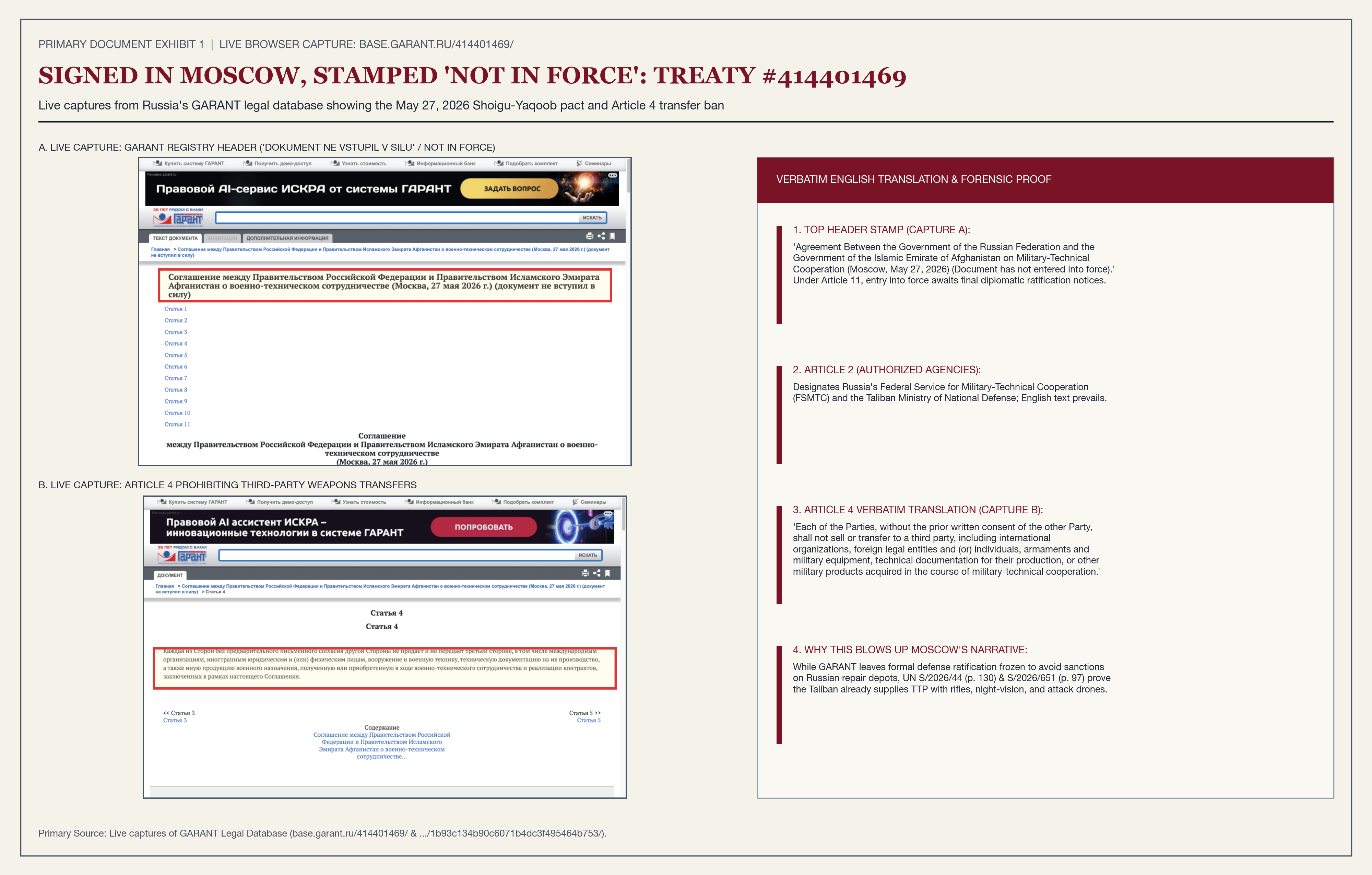
Exhibit 1: Primary Russian GARANT legal registry file (#414401469) for the May 27, 2026 Shoigu-Yaqoob pact, stamped 'Not in force' as of November 12, 2026 alongside Articles 2, 4, and 11.
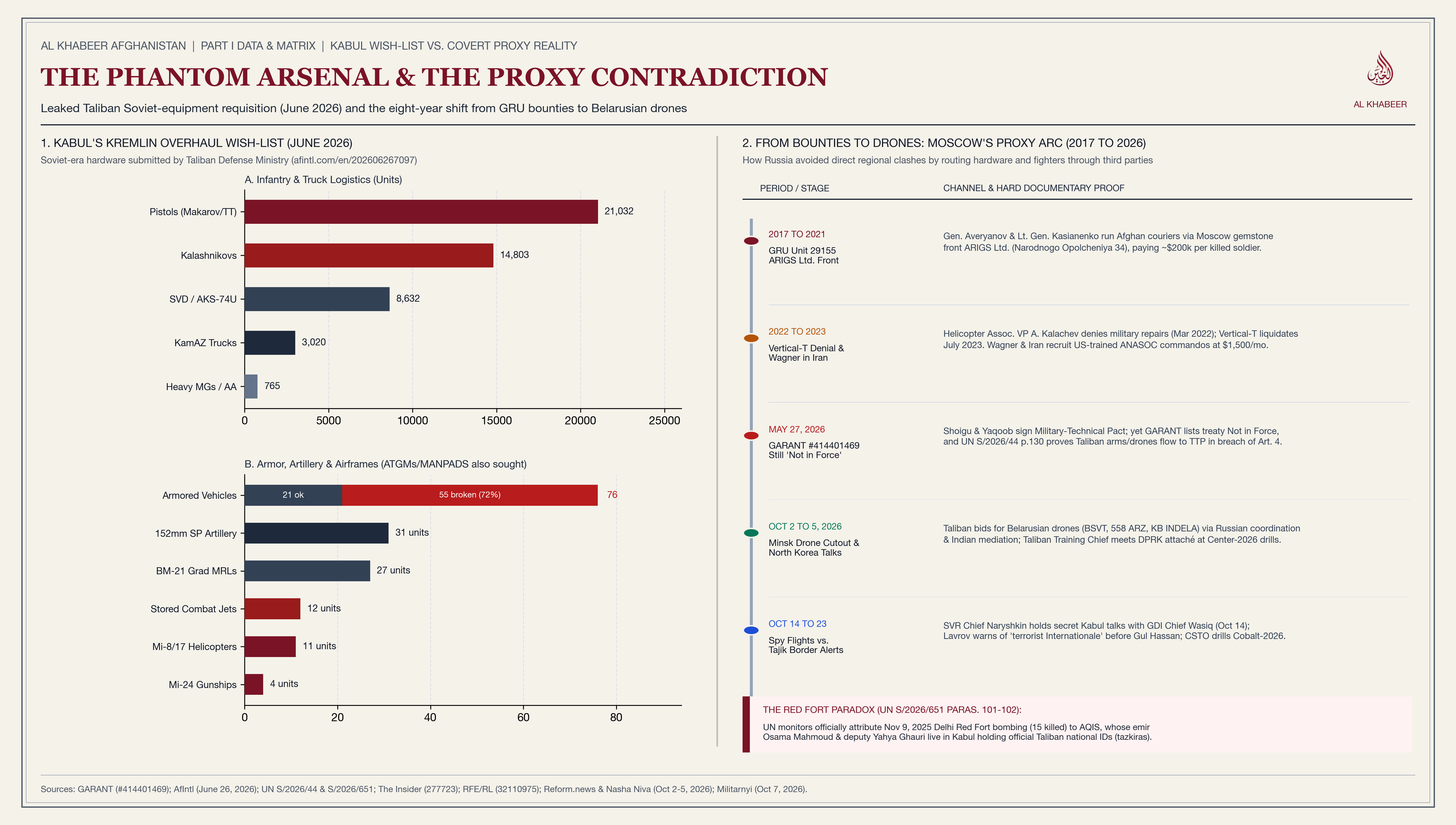
Figure 1: Leaked Taliban June 2026 Soviet-hardware overhaul wish-list alongside Moscow's eight-year proxy and cutout chronology.
This was not Kabul's first attempt to enlist Russian aviation mechanics. On March 15 and 16, 2022, Vladimir Skurikhin, director of Tver-based airline Vertical-T, and Alexander Kalachev, vice president of the Helicopter Industry Association, met Taliban Deputy Prime Minister Mullah Abdul Kabir in Kabul. When Taliban spokesman Inamullah Samangani announced talks on helicopter overhauls, Kalachev pushed back sharply in an interview with NEWS.ru.
"Restoring the fleet of military helicopters was not and could not be discussed."
Alexander Kalachev, Vice President of the Helicopter Industry Association, speaking to NEWS.ru on March 16, 2022
Russian corporate and arbitration records confirm that Vertical-T (INN 6924003639) entered liquidation proceedings and was formally dissolved on July 21, 2023. Four years later, however, following the May 27, 2026 framework pact, Taliban defense officials handed Moscow a sweeping inventory of legacy Soviet hardware tracked by Afghanistan International on June 26, 2026.
The leaked requisition details 14,803 Kalashnikov assault rifles (AK-47, AKM, AKMS, and AK-74 models), 8,632 AKS-74U carbines, SKS rifles, and SVD Dragunov sniper rifles, plus 21,032 Makarov, TT-33, and Stechkin pistols alongside 765 DShK, PKM, KPV, RPK, and ZU heavy machine guns and anti-aircraft mounts. In heavy equipment, the defense ministry listed 3,020 Russian-made KamAZ trucks and tank transporters, 31 self-propelled 152mm artillery pieces, 27 BM-21 Grad multiple rocket launchers, and 76 BTR-60, BTR-70, BMP-1, BMP-2, T-55, and T-62 armored vehicles, of which only 21 are operational and 55 require complete rebuilding.
Most urgently, Kabul sought repairs for 11 Mi-8 and Mi-17 transport helicopters, four Mi-24 attack gunships, 12 stored MiG-21, MiG-23, Su-22, and Su-25 combat jets parked in hangars from Bagram to Herat, guided 9M14 Malyutka and 9K111 Fagot anti-tank missiles, and Strela and Igla shoulder-fired air defense systems to counter cross-border drones and unauthorized aerial strikes along contested frontier zones. Four days after the Moscow signing, on May 31, 2026, Russian Business Center chief Rustam Khabibullin publicly told Tatar-inform that Afghanistan still holds over 100 Kazan-built Mi-17 helicopters and more than 30,000 KamAZ trucks needing service centers.
Yet Moscow kept its commitments strictly verbal. Technical assessments show Afghanistan's fine quartz sand erodes Klimov TV3-117 turbine blades and cuts helicopter overhaul intervals by over 50 percent, requiring factory depot servicing at sanctioned Russian plants such as the Novosibirsk Aircraft Repair Plant. Unwilling to trigger secondary Western sanctions or divert depot capacity from the Ukraine war, Russia confined itself to low-profile technical advice. By July 2026, Taliban engineers needed 13 months just to return a single Mi-17 helicopter to flight.
Even worse for Moscow's legal cover, Article 4 of the May treaty is already dead on arrival. While Shoigu's security council demanded strict end-user controls against third-party diversion, the 37th Report of the UN Sanctions Monitoring Team (Document S/2026/44, February 4, 2026) documented exactly where advanced weaponry inside Afghanistan is going.
"TTP used advanced assault rifles, night-vision devices, thermal-imaging devices, sniper systems and drone attack systems. Most of these were provided by the de facto authorities in conjunction with weapons permits and travel documents."
UN Security Council Sanctions Monitoring Team, 37th Report (Document S/2026/44, February 4, 2026, Paragraph 130)
Follow-on UN monitoring in August 2026 (Document S/2026/651, Paragraph 97) confirmed that the Tehrik-e-Taliban (TTP) insurgent network formally established a dedicated TTP Air Force drone wing on December 25, 2025, turning Moscow's hope of a disciplined Taliban security partner into a cross-border war that torpedoed Russia's own regional diplomacy.
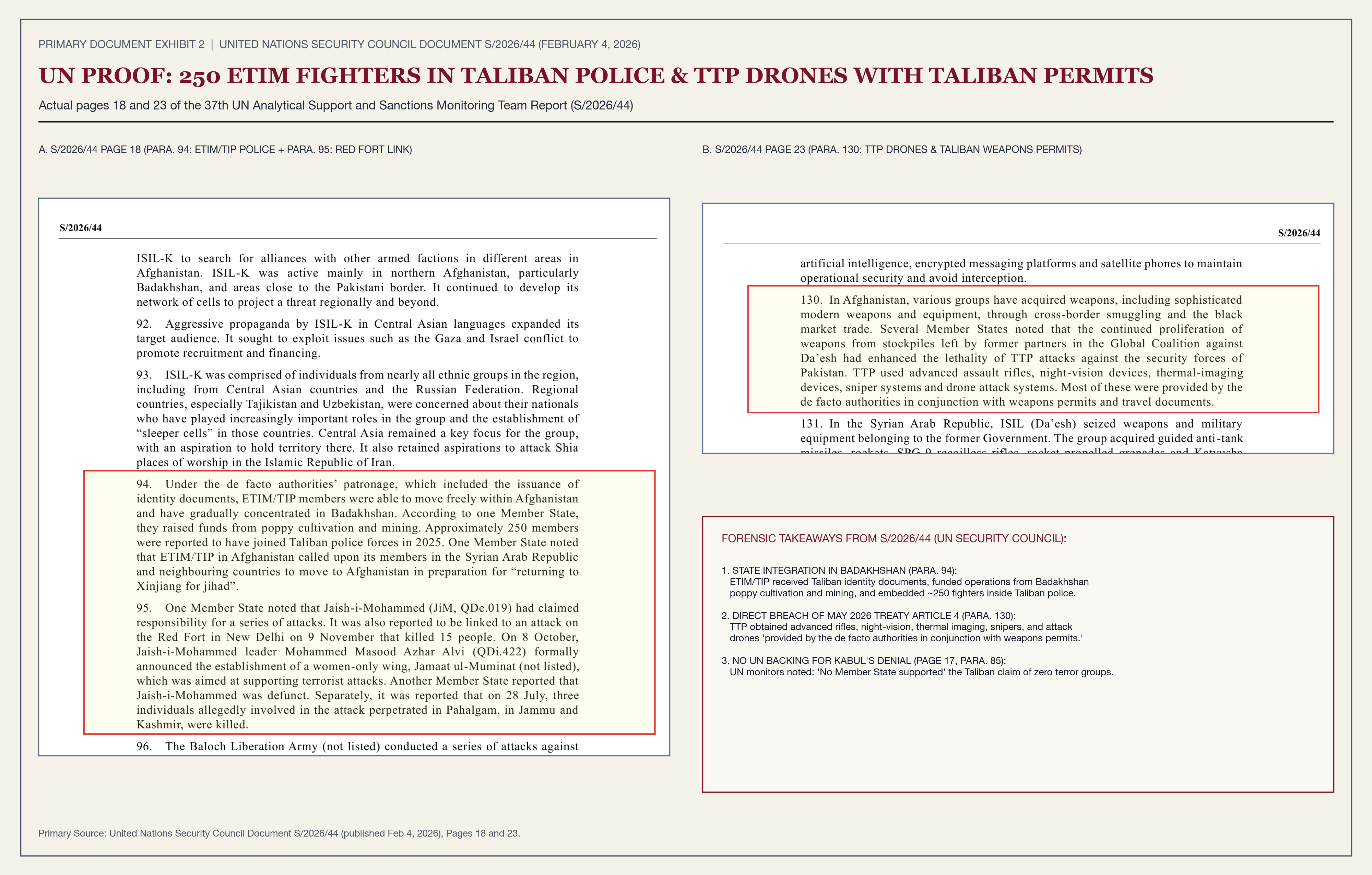
Exhibit 2: Actual UN Security Council Document S/2026/44 (February 4, 2026), Pages 18 and 23, documenting \~250 ETIM/TIP fighters inside Taliban police forces and Taliban weapon/drone supplies to TTP.
II. The Minsk Cutout, the Red Fort Paradox, and Pyongyang
When Russia wants leverage inside Afghanistan without absorbing direct diplomatic fallout, it relies on cutouts. The blueprint was laid well before the 2021 American withdrawal. A joint investigation by The Insider and Der Spiegel published on January 8, 2025 exposed how GRU Unit 29155, led by General Andrey Averyanov, Lieutenant General Ivan Kasianenko, and Colonel Alexey Arkhipov, funneled payments averaging 200,000 dollars per killed coalition soldier through ARIGS Ltd., a Moscow gemstone trading company incorporated in September 2017 at Narodnogo Opolcheniya 34, directly beside a GRU residential block and the GRU Academy.
After August 2021, Moscow flipped from funding insurgents against Washington to harvesting abandoned Afghan special forces for Ukraine. In November 2022, former Afghan 207 Zafar Army Corps commander General Abdul Raouf Arghandiwal confirmed to Radio Free Europe / Radio Liberty that Russia's Wagner mercenary network, working alongside Iranian security bureaus, was offering 1,500 dollars per month and Russian residency visas to American-trained Afghan commandos stranded in Iran.
"The Russians, through the Wagner security company and in cooperation with the host country [Iran], where the majority of Afghanistan's security and defense forces are now located, as well as some Afghans who previously moved to Iran and Russia, are trying to recruit commandos."
General Abdul Raouf Arghandiwal, former commander of the Afghan 207 Zafar Army Corps, speaking to RFE/RL on November 1, 2022
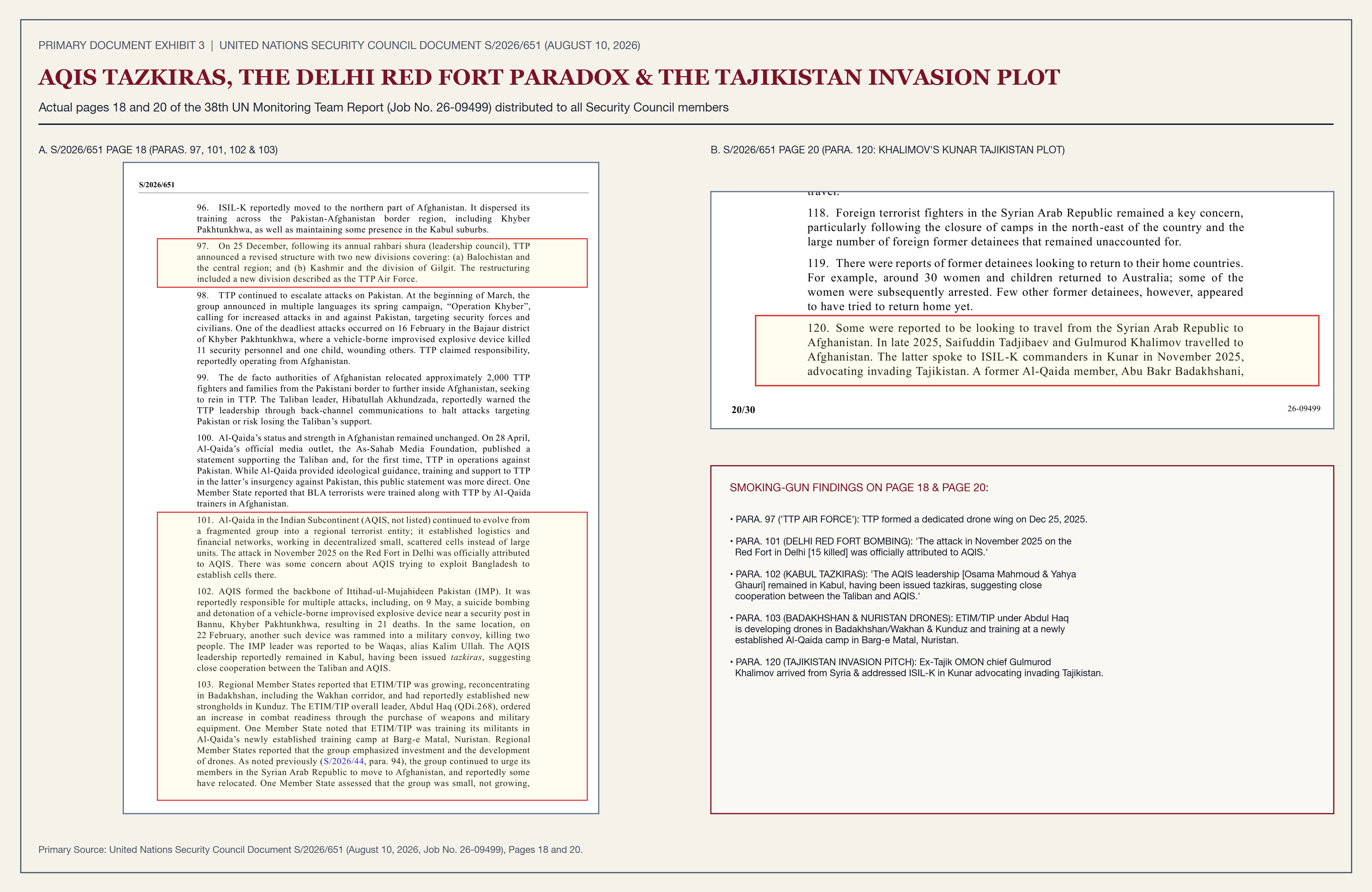
Exhibit 3: Actual UN Security Council Document S/2026/651 (August 10, 2026), Pages 18 and 20, linking the Nov 2025 Delhi Red Fort bombing to AQIS while confirming AQIS leaders hold Kabul tazkiras and Gulmurod Khalimov urged invading Tajikistan.
By 2026, as cross-border aerial strikes exposed the Taliban's lack of drones and air defense, a far more audacious triangulation emerged through Minsk. Moscow first pulled Belarus directly into its diplomatic architecture, inviting Belarusian representatives to the Moscow Format while Belarusian Deputy Foreign Minister Sergei Lukashevich hosted Kabul's National Development Corporation in February 2026. In August 2026, a 13-member Taliban ministerial delegation led by Acting Agriculture Minister Ataullah Omari toured Minsk industrial plants for INNOPROM, prompting Ukraine's Foreign Intelligence Service on September 2 to warn of expanding Minsk-Kabul defense and dual-use ties. On October 1, Belarusian Foreign Minister Maksim Ryzhenkov met Taliban Commerce Minister Nooruddin Azizi in Minsk, followed weeks later by non-resident Belarusian Ambassador Alexander Ogorodnikov presenting his credentials in Kabul.
In early October 2026, coordinated reporting by Afghanistan International, Belarusian independent outlets Nasha Niva and Reform.news, and Ukrainian agency UNN revealed what stood behind the diplomatic choreography. Citing five former senior Afghan defense and security officials alongside a senior source close to the Taliban leadership in Kabul, investigators established that Taliban officials had opened negotiations to acquire weapons and military drones from Belarus, backed by Belarusian state defense exporters such as Belspetsvneshtekhnika (BSVT), Beltechexport, the 558th Aircraft Repair Plant in Baranovichi, and drone developer KB INDELA.
"At least two former senior military and security officials said that Belarus is a country that, through Indian mediation and with Russia's approval, is prepared to provide the Taliban with some equipment, particularly drones."
Reform.news and Afghanistan International investigation citing former senior Afghan security officials, October 5, 2026
A senior Kabul source quoted in the same investigation stated that those agreements were reached largely at Russia's request and in coordination with Russia. The mechanism revived an established pre-2021 workaround: under former President Ashraf Ghani, when American pressure barred direct Kabul contracts with Minsk, India financed the overhaul and delivery of four Belarusian Mi-35 gunships for Afghanistan. Notably, in June 2026, the Indian Army took delivery of 106 Belarusian-developed kamikaze drones amid rising regional border tensions.
Yet pairing UN Security Council documents with those Minsk procurement reports uncovers an astonishing strategic paradox in New Delhi and Kabul. In August 2026, the 38th UN Sanctions Monitoring Team Report (Document S/2026/651, Paragraphs 101 and 102) explicitly attributed the November 9, 2025 terrorist attack on the Red Fort in New Delhi, which killed 15 people, to Al-Qaida in the Indian Subcontinent (AQIS). In the very next paragraph, UN monitors confirmed who protects AQIS's top command, identified in Document S/2026/44 as emir Osama Mahmoud and deputy Yahya Ghauri.
"The attack in November 2025 on the Red Fort in Delhi was officially attributed to AQIS... The AQIS leadership reportedly remained in Kabul, having been issued tazkiras, suggesting close cooperation between the Taliban and AQIS."
UN Security Council Sanctions Monitoring Team, 38th Report (Document S/2026/651, August 10, 2026, Paragraphs 101 to 102)
Nor was Minsk the only sanctioned partner pulled into Kabul's orbit under Russian supervision. From September 28 to October 3, 2026, Taliban Joint Combat Training Commander Mawlawi Nasibullah Madani led a delegation to Russia's Center-2026 strategic war games at the Chebarkul training ground in Chelyabinsk Oblast. Official Taliban defense ministry photographs published on October 3, 2026 captured Madani walking the arms exhibition floor and holding bilateral military talks directly with North Korean Military Attaché Ro Ki Chol.
III. Spy Flights by Day, Terror Warnings by Night
While Russian diplomats praised Taliban stabilization abroad, Moscow's own intelligence chiefs sounded the alarm behind closed doors. On May 26, 2026, Federal Security Service Director Alexander Bortnikov told a CIS security summit that Russian, Tajik, and Uzbek intelligence services had disrupted six Islamic State Khorasan Province plots in early 2026, including five planned attacks across Russian cities including Moscow. Remarkably, Bortnikov blamed British intelligence services for encouraging northern Afghan instability and insisted Russia must expand counterterrorism ties with the Taliban.
Five months later, that balancing act broke into open contradiction. Following the diplomatic deadlock at Russia's 8th Moscow Format summit on October 5, SVR Director Sergei Naryshkin made his unannounced October 14 flight to Kabul to meet Taliban General Directorate of Intelligence chief Abdul Haq Wasiq, a former Guantanamo detainee released in 2014. Neither agency released details of the high-level intelligence mission, which underscored Moscow's quiet reliance on Kabul's security apparatus despite escalating regional friction.
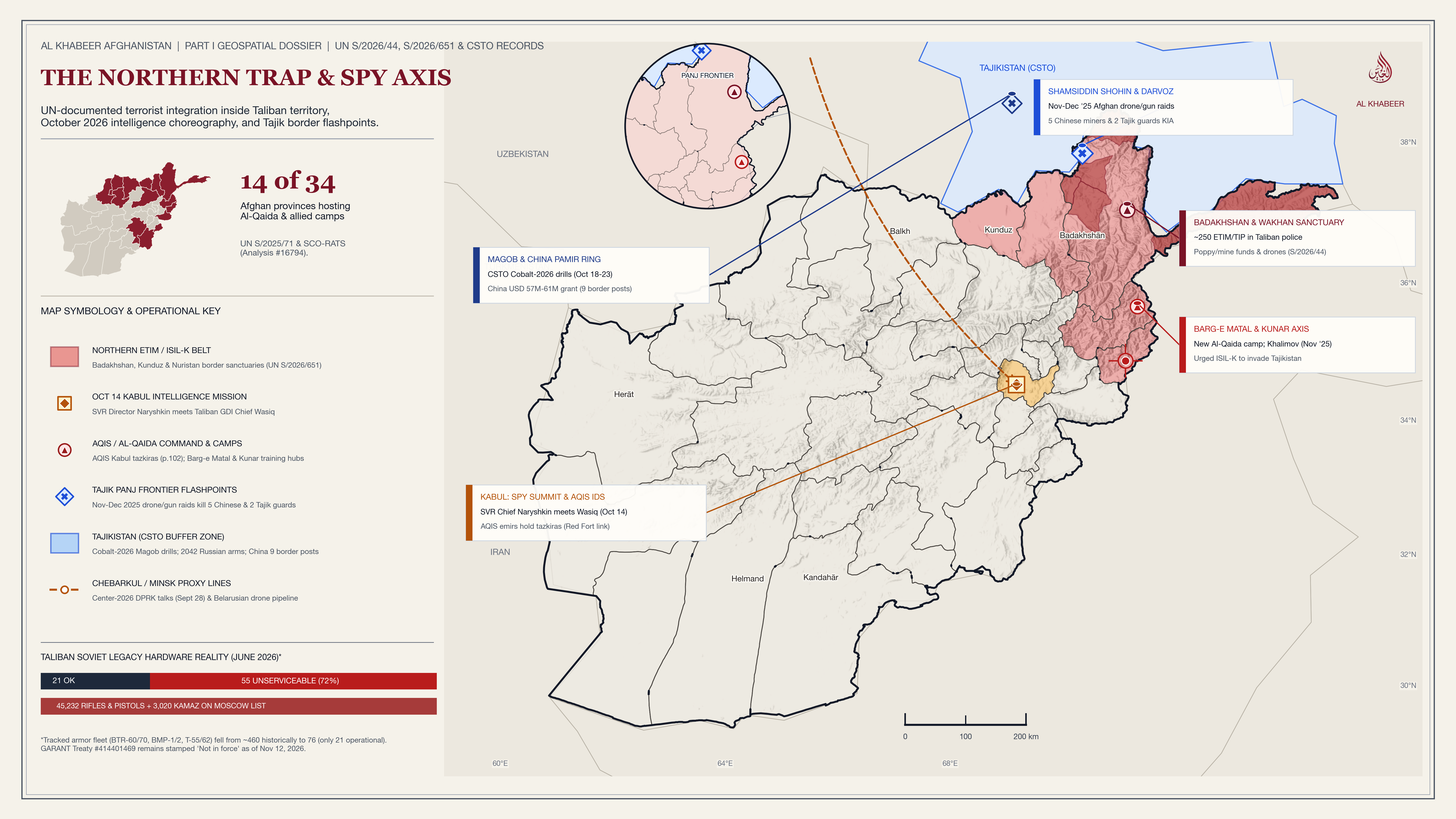
Figure 2: Topographic OSINT theater map tracing the October 2026 Russian intelligence flight to Kabul alongside UN-documented AQIS, ETIM/TIP, and ISIL-K sanctuaries along Tajikistan's CSTO frontier.
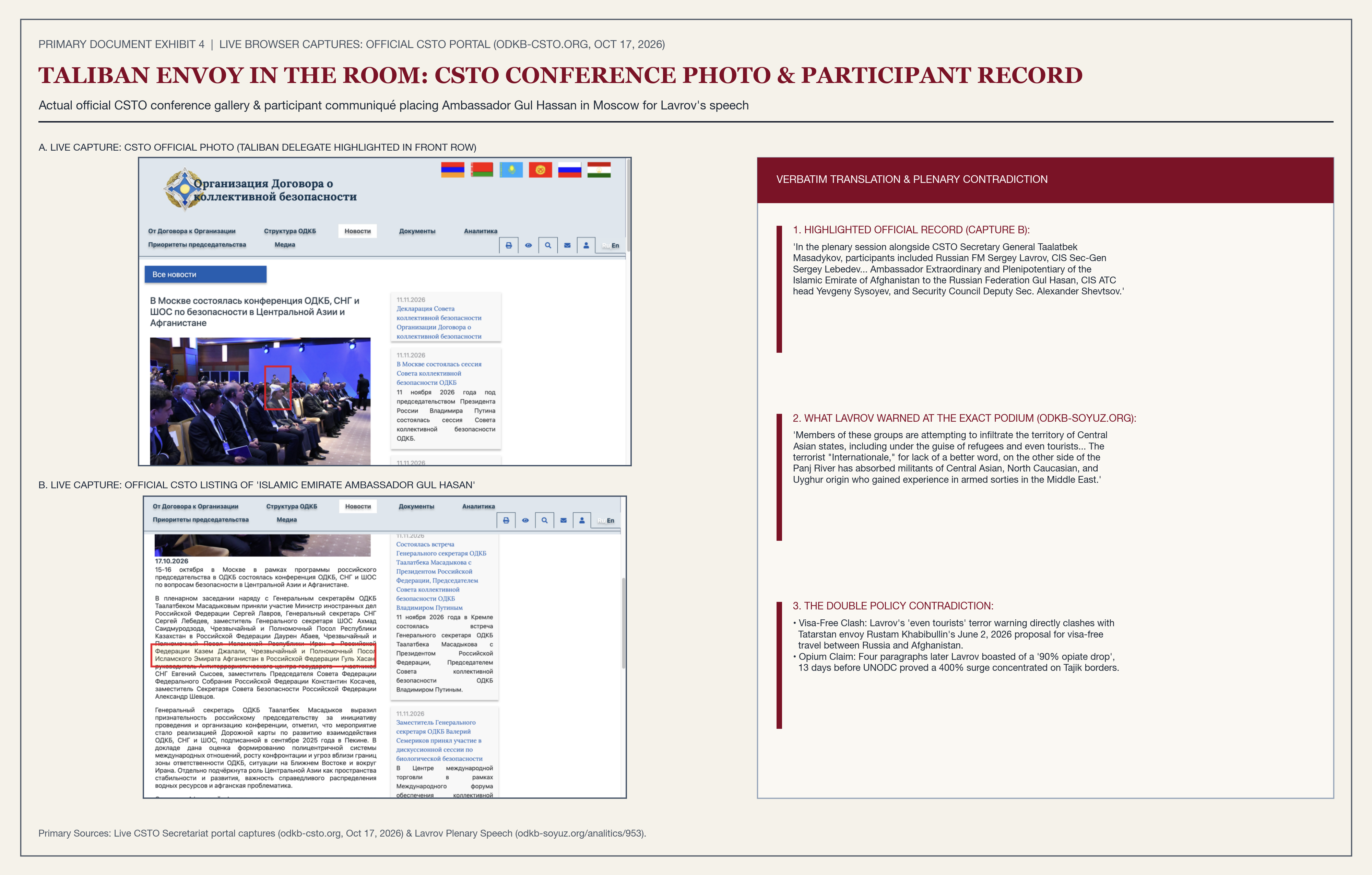
Exhibit 4: Official CSTO portal record (odkb-csto.org) listing Taliban Ambassador Gul Hasan in the Moscow conference alongside Foreign Minister Sergey Lavrov's verbatim Russian warning (odkb-soyuz.org).
On October 16, 2026, barely 48 hours after Naryshkin's Kabul handshake, Russian Foreign Minister Sergey Lavrov stepped before a Moscow security conference of the CSTO, CIS, and SCO. According to the official CSTO participant list, Taliban Ambassador Mawlawi Gul Hassan sat directly inside the Moscow conference hall as Lavrov delivered a blunt warning on northern Afghanistan, directly undercutting a June 2, 2026 proposal by Tatarstan's Trade Center chief Rustam Khabibullin to grant visa-free entry between Russia and Afghanistan.
"Members of these groups are attempting to infiltrate the territory of Central Asian states, including under the guise of refugees and even tourists... The terrorist 'Internationale,' for lack of a better word, on the other side of the Panj River has absorbed militants of Central Asian, North Caucasian, and Uyghur origin who gained experience in armed sorties in the Middle East and Africa."
Russian Foreign Minister Sergey Lavrov, CSTO-CIS-SCO Security Conference in Moscow, October 16, 2026 (odkb-soyuz.org/analitics/953)
United Nations intelligence files explain why Moscow's security apparatus is simultaneously courting Kabul's spy chief and fortifying Tajikistan's border. Document S/2026/44 (Paragraph 94) reveals that East Turkestan Islamic Movement and Turkistan Islamic Party militants received Taliban identity cards, financed operations through Badakhshan poppy cultivation and mining, and embedded approximately 250 fighters inside the Taliban's own police forces in 2025. Document S/2026/651 (Paragraphs 103 and 120) adds that ETIM/TIP under commander Abdul Haq is building drone capabilities in Badakhshan's Wakhan corridor and Kunduz while training at a newly built Al-Qaida camp in Barg-e Matal, Nuristan.
The spillover has already drawn blood along Moscow's CSTO treaty line. On November 26, 2025, an explosive drone launched from Badakhshan struck the Shohin SM gold-mining camp in Tajikistan's Shamsiddin Shohin district, killing three Chinese workers. Four days later, a cross-border shooting in Darvoz killed two Chinese highway workers, and on December 23 and 24, 2025, militants armed with night-vision gear killed two Tajik border guards at Border Post No. 5.
On October 5, 2026, the exact day Moscow praised Kabul at the Moscow Format, Russian Foreign Ministry department chief Alexander Sternik confirmed accelerated Russian arms deliveries to Tajikistan under a modernization plan running through 2042. Between October 18 and October 23, 2026, CSTO special forces staged Cobalt-2026 counter-incursion drills at Tajikistan's Magob training range while China ratified a 57 million to 61 million dollar grant to build nine fortified border facilities in the Pamirs. Russia promised Afghanistan a loyal partner and restored air power. Instead, it inherited an unratified treaty, a Belarusian drone cutout, and an increasingly fortified frontier controlled on the ground by Beijing.
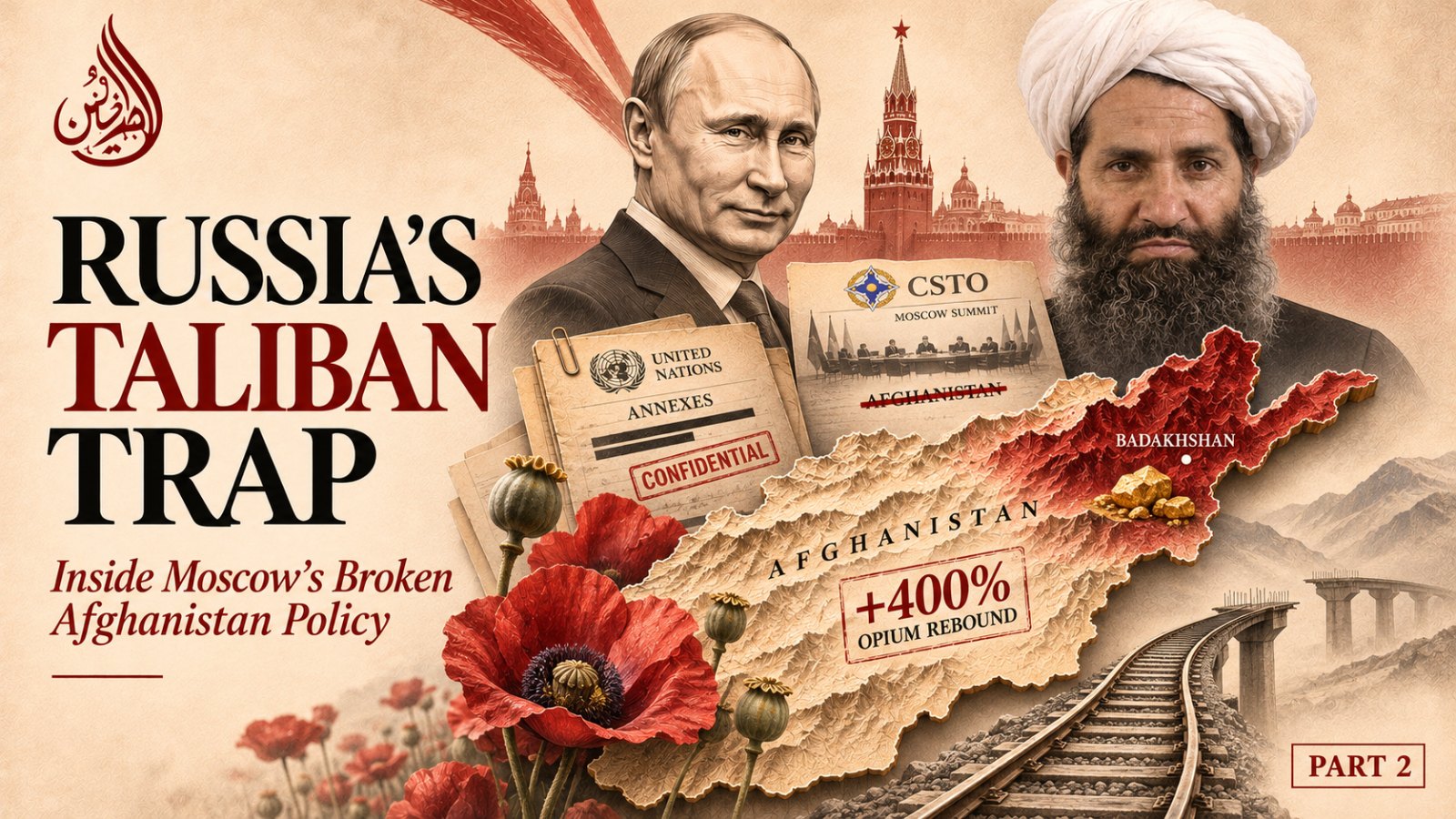
Next in Part Two: Inside the Badakhshan gold-and-opium purge, the suppressed United Nations annex in which Kabul's Interior Ministry begged the world not to publish the 2026 drug survey, and why Deputy Prime Minister Alexei Overchuk's November 12 railway pitch in Kabul is built on collapsed trade corridors.
Follow Al Khabeer
Independent reporting on Afghanistan. Follow our work on social media for the latest news, fact checks and analysis.