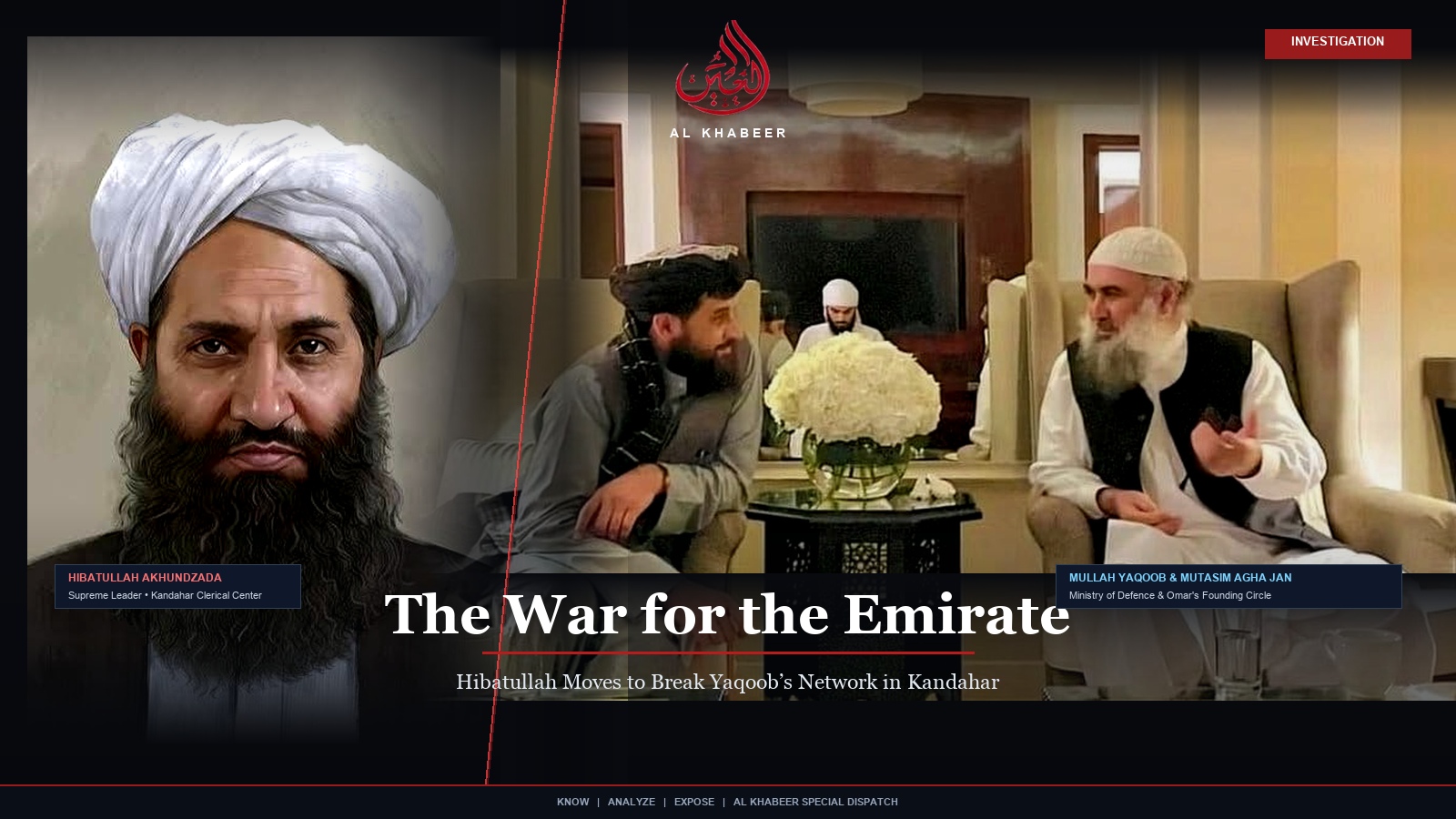
The War for the Emirate: Hibatullah Moves to Break Yaqoob’s Network
Mutasim Agha Jan’s arrest signals Kandahar’s effort to dismantle Yaqoob’s succession network and tighten Hibatullah’s grip on the Emirate.
On Sunday evening, intelligence forces in kabul quietly surrounded a religious school. Within an hour, Mullah Mutasim Agha Jan, a founding Taliban member and former finance minister under Mullah Mohammad Omar, was taken into custody and transported immediately to Kandahar.
Taliban officials in Kabul initially attempted to downplay the raid, claiming the heavy security presence was merely part of a routine gathering of local clerics. But internal accounts tell a very different story.
An insider from the Taliban’s General Directorate of Intelligence (GDI) told Al Khabeer that the arrest was ordered directly by Supreme Leader Hibatullah Akhundzada’s office. According to the source, the objective was specific: seize Mutasim’s phones and documents, place him in isolation, and cut off his communication with Global and Afghanistan Based allies.
Why Mutasim Matters to Yaqoob
Mutasim is not an ordinary former official. He is one of the few surviving veterans of Mullah Omar’s inner circle who still carries deep respect among frontline commanders, senior clerics, and political figures outside Afghanistan.
More importantly, he had become a vital political asset for Defence Minister Mullah Mohammad Yaqoob, the eldest son of Mullah Omar.
Sources inside Afghanistan report that Mutasim was quietly lobbying religious scholars and influential elders to back Yaqoob as a future Supreme Leader. His goal was to build a broad coalition that could position Yaqoob to take power when the time comes. By arresting Mutasim, Kandahar is moving to dismantle that coalition before it grows strong enough to openly challenge Hibatullah.
Intelligence sources inside Kabul have revealed to Al Khabeer that Mutasim’s contacts had recently expanded into highly sensitive operational terrain. Shortly before his detention in Kabul, Mutasim reportedly held a confidential meeting in Kabul’s diplomatic Green Zone with Tehrik-e-Taliban Pakistan (TTP) chief Mufti Noor Wali Mehsud. According to sources familiar with the discussions, the two men addressed plans regarding new operational staging bases being established in eastern border regions, alongside mounting shared grievances over Hibatullah’s aggressive internal clampdowns, which have seen several aligned commanders and cadres imprisoned by Kandahar intelligence.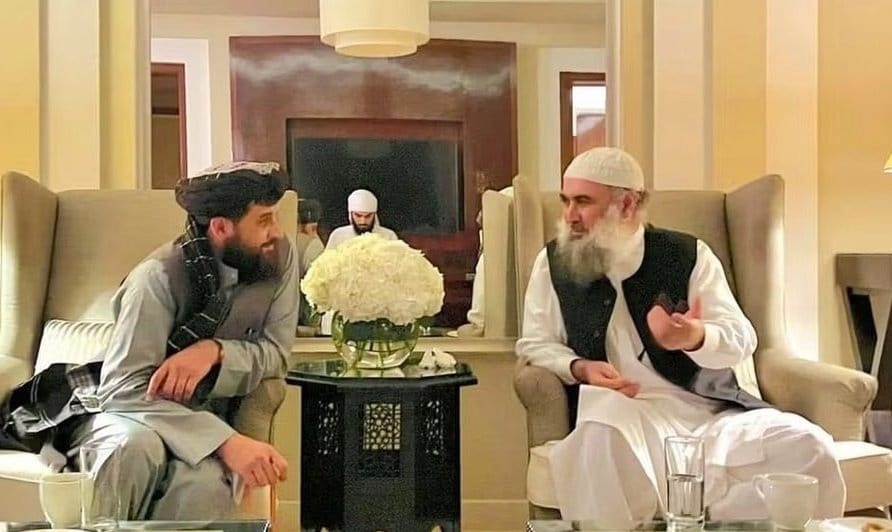 Fig1: Documentary Evidence: Mullah Mohammad Yaqoob (left) in consultation with veteran confidant Mullah Mutasim Agha Jan (right). Mutasim served as the primary diplomatic bridge linking Mullah Omar's veteran network to Yaqoob's succession coalition. (Al Khabeer Archives)
The Battle Over Legitimacy
The arrest exposes the main fault line inside the Taliban leadership. Hibatullah controls the official title of Supreme Leader, the judiciary, and the state budget. However, he lacks the one advantage he can never create: the name and legacy of Mullah Omar.
Yaqoob does not need to launch an open rebellion. His family name alone guarantees him loyalty from veteran fighters and commanders who view him as the rightful heir to the movement.
Because confronting the Defence Minister directly could trigger an armed revolt in Kabul, Kandahar is choosing to attack the network around him instead. By arresting key intermediaries like Mutasim, Hibatullah hopes to isolate Yaqoob and show the movement that ties to Mullah Omar's family will not protect anyone from Kandahar's security apparatus.
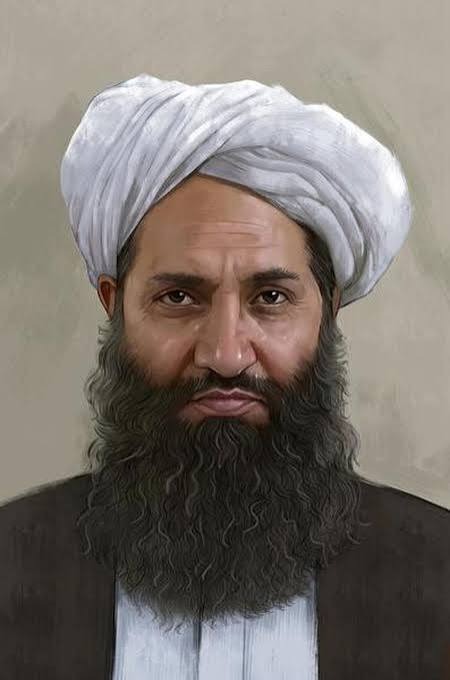
Fig2: Supreme Leader Hibatullah Akhundzada. Operating from Kandahar, Akhundzada enforces decrees through special GDI units while preemptively neutralizing competing power centers. (Al Khabeer)
A Deliberate Pattern: Three Competing Power Centers
This was not Mutasim’s first detention. In April 2026, he was stopped on the Kabul–Kandahar highway after attempting to organize an independent council of Afghan and Pakistani religious scholars. While he was released shortly after, his second arrest confirms that Kandahar is carrying out a deliberate purge of anyone operating outside Hibatullah's direct control.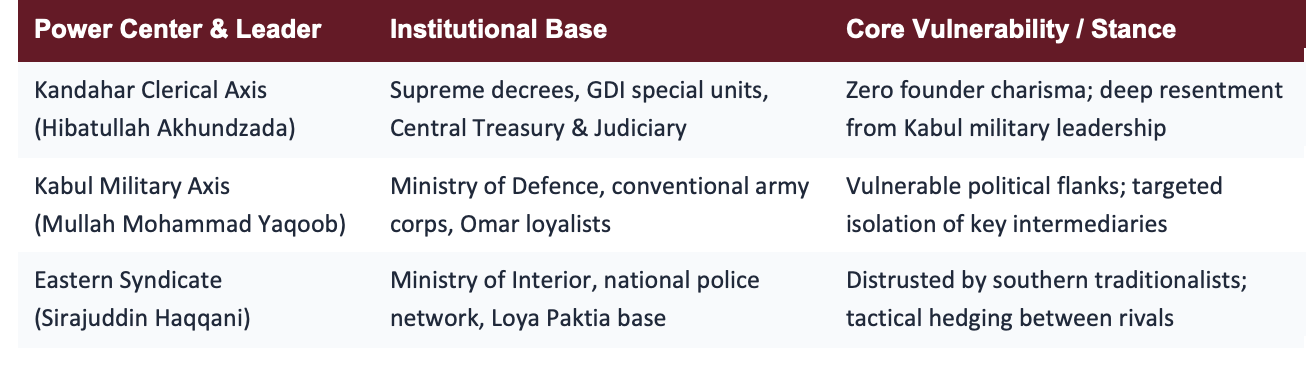
Despite the Taliban’s public claims of unity, power is now divided across three competing camps:
The Human Cost
While Taliban leaders focus on internal rivalries, ordinary Afghans are paying the price for their neglect.
According to the United Nations Development Programme (UNDP), roughly 74 percent of Afghans cannot meet their basic daily needs. The World Food Programme reports that over 17 million people face severe hunger, and nearly five million women and children require emergency treatment for malnutrition. Living standards are falling, jobs are disappearing, and women and girls remain locked out of education and public life.
Yet the leadership in Kandahar is not holding emergency meetings to address poverty or hunger. Their attention is entirely consumed by surveillance, factional purges, and succession politics. The struggle between Hibatullah and Yaqoob is not about the future of Afghanistan. It is a contest between rival factions over who gets to control the state, while the Afghan people are left to endure the consequences.
Follow Al Khabeer
Independent reporting on Afghanistan. Follow our work on social media for the latest news, fact checks and analysis.