Made in Kandahar: How the Taliban Built and Weaponized ISKP
When Kabul fell, ISKP prisoners went free. Al Khabeer examines the Taliban's prison releases, militant networks and claims of fighting Daesh.
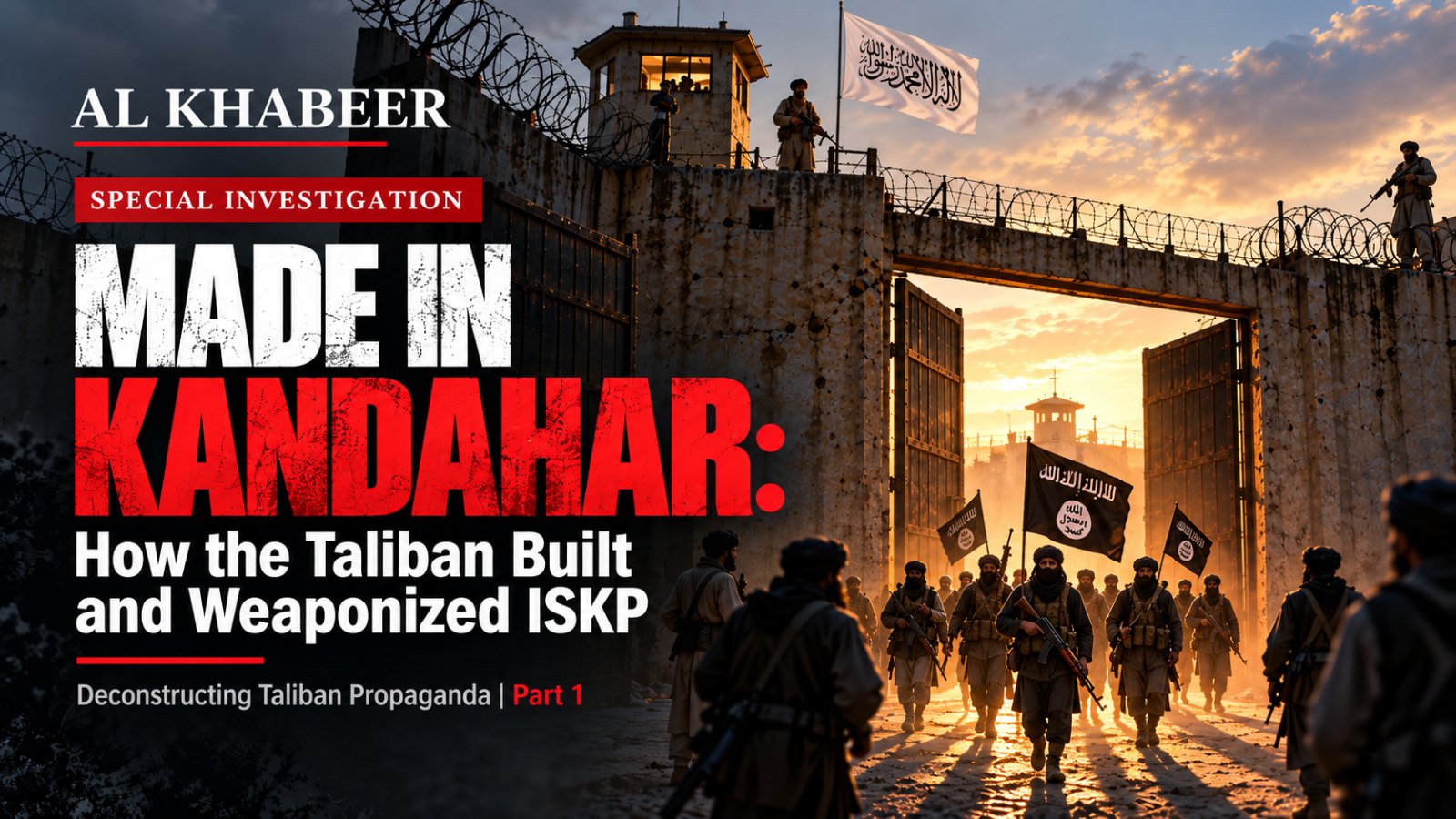
The Taliban tell the world they are fighting Daesh. But on August 15, 2021, the regime opened prison doors, freed 1,100 hardcore terrorists, and gave them a free pass. The arsonist is now selling fire insurance.
The Taliban have spent five years selling the world a simple story: 'Without us, Afghanistan will fall into the hands of Daesh.' In Doha, Moscow, and Beijing, Taliban officials repeat the exact same warning: Recognize our government. Give us our frozen billions. Ignore how we treat women. If you don't, Daesh will attack your cities. It is an old trick: an authoritarian regime creates fear of an outside monster so the world looks away from its own crimes. The Taliban want applause for fighting a fire. But they refuse to answer one simple question: who gave the terrorists the gasoline in the first place? On August 15, 2021, the Taliban did not inherit an ISKP crisis. They unlocked the cages.
August 15, 2021: Who Opened the Prison Doors?
The Taliban claim to be the biggest enemy of Daesh. That claim dies the moment you look at what happened on their very first day in power. When the Afghan government collapsed on August 15, 2021, Taliban fighters took over Kabul. They did not rush to protect banks, schools, or government offices. Their first stop was the maximum-security prisons at Bagram Airfield (Parwan Detention Facility) and Pul-e-Charkhi. Taliban commanders threw open the cell doors. In a single afternoon, they released more than 1,100 dangerous, trained ISKP fighters, bomb-makers, and suicide attack planners. These were not petty thieves. They were convicted terrorists whose networks had been broken by years of military pressure. In just a few hours, the Taliban gave their supposed enemy its entire army back. This was no accident. The Taliban did not 'lose control' of the prisons. They controlled the area, opened the locks, and watched over a thousand trained killers walk free into the streets.
The Smoking Gun: From Bagram Cell to Abbey Gate
As documented in declassified U.S. military records, al-Logari was an ISKP operative held in custody at the Bagram detention facility since 2017. On August 15, 2021, the Taliban breached the facility and set him free. Exactly 11 days later, on August 26, al-Logari walked to Abbey Gate at Kabul Airport, strapped into an explosive vest, and detonated himself. His bomb slaughtered over 170 Afghan civilians and 13 U.S. service members—the deadliest single attack of the withdrawal, confirmed directly by U.S. CENTCOM investigations. The blood of those 170 Afghans was on al-Logari's hands. But the key to his cell was in the Taliban's hands.
From Prison Cells to Taliban Uniforms
The prison break was only the start. Immediately after walking out of prison, ISKP networks used large amounts of cash to buy new identities for their men. Released commanders were given fake papers and registered as members of the Tehrik-e-Taliban Pakistan (TTP) or the Afghan Taliban itself. This gave the terrorists the ultimate disguise: they could carry weapons in the open, drive through every Taliban checkpoint without getting stopped, and set up safe houses across Kabul and eastern Afghanistan without interference.
Look at the sickening double standard: the Taliban beat poor Afghan shopkeepers on the street for shaving their beards, while allowing over a thousand convicted terrorists to move freely in Taliban uniforms.
The 80/20 Scam: Fake Raids for the Cameras
Whenever the world criticizes the Taliban for human rights abuses, the Taliban’s intelligence agency (GDI) puts on a show. State media broadcasts midnight raids, showing dead bodies to claim the regime is 'wiping out Daesh.' It is complete theater. Counter-terrorism experts point to a clear 80/20 rule inside ISKP:
- The 20%: The disposable foot soldiers. These are young, poor recruits whom the Taliban kill in televised raids to look good for international news.
- The 80%: The real bosses and money networks. The people who handle the cash (Daftar Al-Sadiq), the safe houses, and the command centers remain completely untouched.
The leader of ISKP is not hiding in a mountain cave. He is an educated Afghan from Kabul who grew up inside university circles in the capital. The Taliban’s intelligence service knows these networks exist. They leave them alone because they need them alive.
The Truth Kandahar Cannot Hide
Why would the Taliban let this threat survive? Because an unpopular dictatorship needs fear to stay in power. A functioning ISKP gives the Taliban three massive advantages:
- An excuse to kill Afghans at home: Whenever the Taliban want to murder former Afghan army soldiers or silence religious critics, they simply label them 'secret Daesh fighters.'
- Permanent fear on the streets: It gives the regime an excuse for armed checkpoints, midnight arrests, and total control over the population.
- Blackmail with foreign countries: It gives the Taliban a bargaining chip with foreign governments: 'Give us money and recognition, or we will let Daesh attack you.'
The Taliban say they are protecting Afghanistan from Daesh. Before the world accepts that lie, Kandahar must answer for the truth: they are the ones who opened the prison gates, they are the ones who let the terrorists hide in Taliban clothing, and they are the ones using the fear of Daesh to stay in power. Fighting terrorism is not a public relations stunt. The world must stop trusting a regime of arsonists who sell fire insurance for a fire they started themselves.
Follow Al Khabeer
Independent reporting on Afghanistan. Follow our work on social media for the latest news, fact checks and analysis.