Is the NRF Rising? Inside the Battle the Taliban Are Quietly Losing
An Al Khabeer OSINT review examines anti-Taliban resistance, border clashes, and the NRF’s diplomatic campaign amid growing pressure on Kabul in 2026.
Before dawn on July 17, 2026, fighters of the Homeland Soldiers Front (HSF), led by former Afghan special forces commando Qayum Malang, stormed the district administrative center of Yaftali Sufla in Badakhshan. Within hours, they disarmed local Taliban forces, raised their flag minutes from provincial capital Faizabad, and vanished back into the surrounding ridges before Taliban Army Chief Fasihuddin Fitrat could deploy reinforcements. It marked the first time since August 2021 that an anti-Taliban unit seized a district headquarters, however briefly.
Publicly, Kabul insists nothing is happening. Badakhshan police spokesman Ehsanullah Kamgar and Taliban chief spokesman Zabihullah Mujahid have repeatedly assured diplomats that “there is no resistance” and that “Badakhshan is calm.” That narrative collapses against the operational geography of late 2026.
The real question is no longer whether Ahmad Massoud’s National Resistance Front (NRF) can march conventionally into Kabul tomorrow. That is a strawman set by Taliban apologists. The real question is whether the Taliban can sustain a multi-front asymmetric war across a crumbling state. An audit of resistance tracking through November 7, 2026, paired with the NRF’s diplomatic campaign at wearenrf.org, shows the Emirate is quietly losing on terms it cannot control.
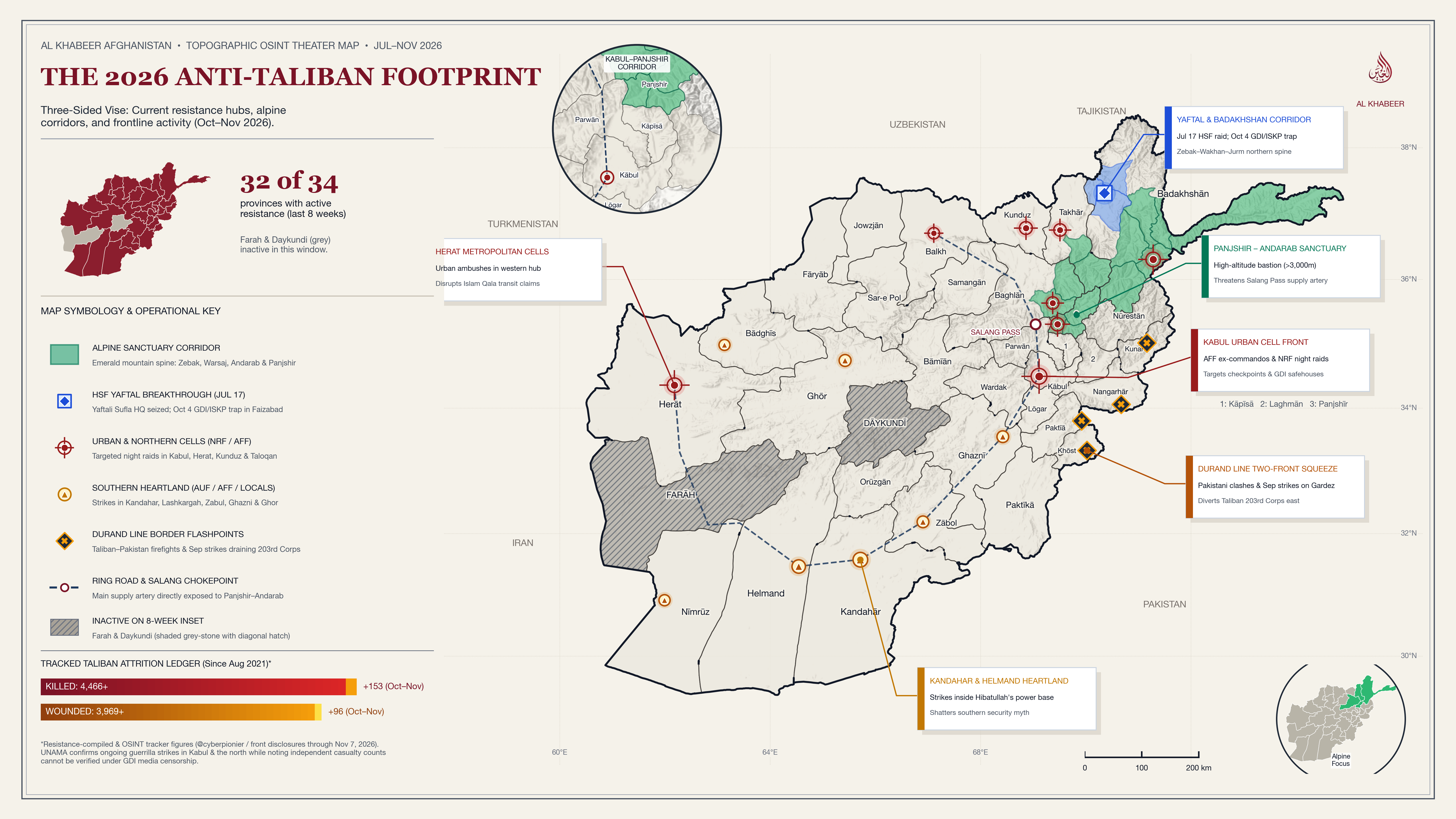
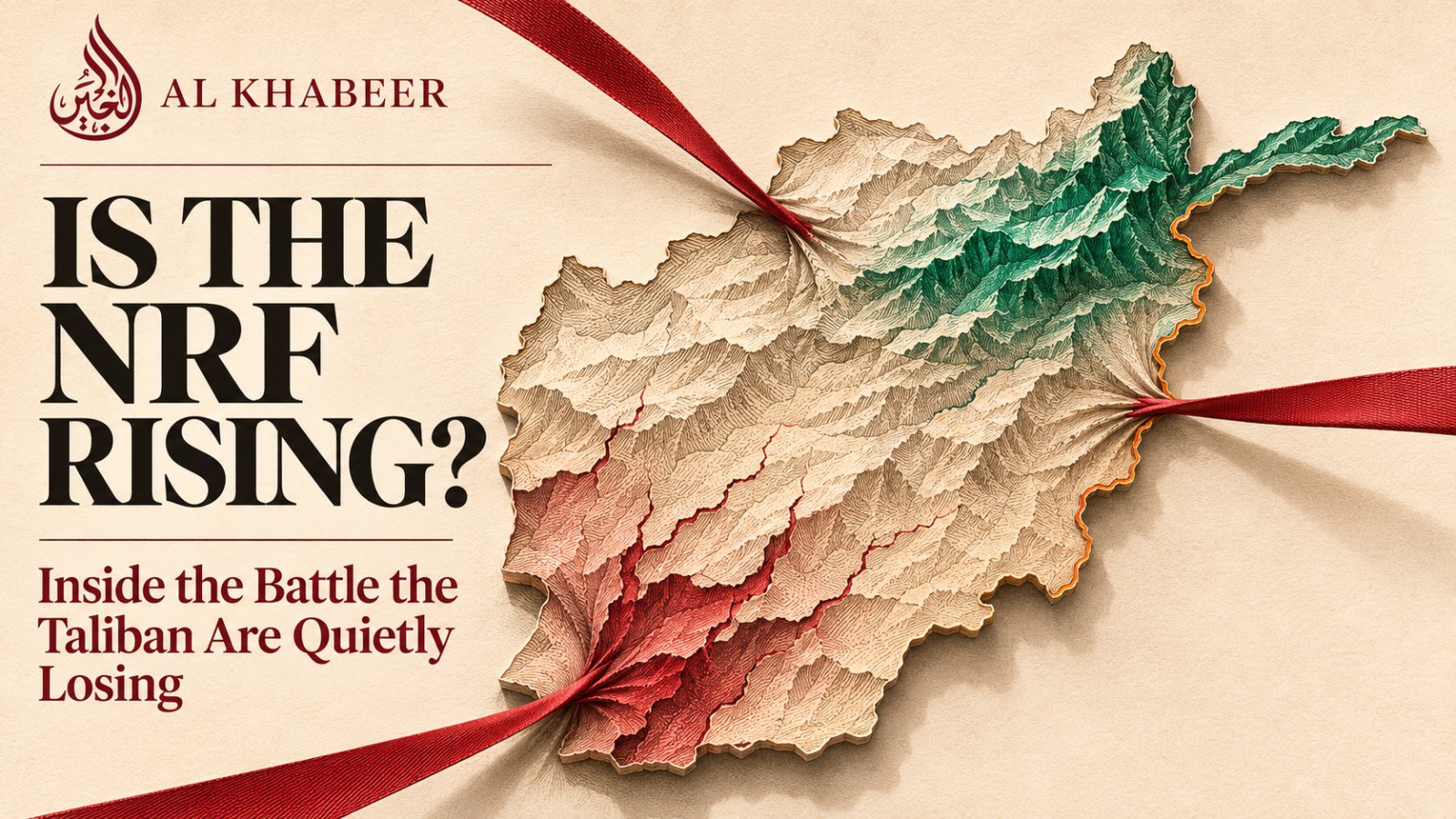
Figure 1: Al Khabeer geospatial reconstruction of the 2026 anti-Taliban theater, integrating the Badakhshan–Panjshir alpine corridor, urban and southern strike clusters, and Durand Line border clashes.
I. The Alpine Spine: Why the North Refuses to Break
The defining feature of the 2026 battlefield is a continuous corridor along Afghanistan’s northeastern spine, linking Zebak, Wakhan, and Jurm in Badakhshan through Takhar’s Warsaj and Baghlan’s Andarab straight into Panjshir.
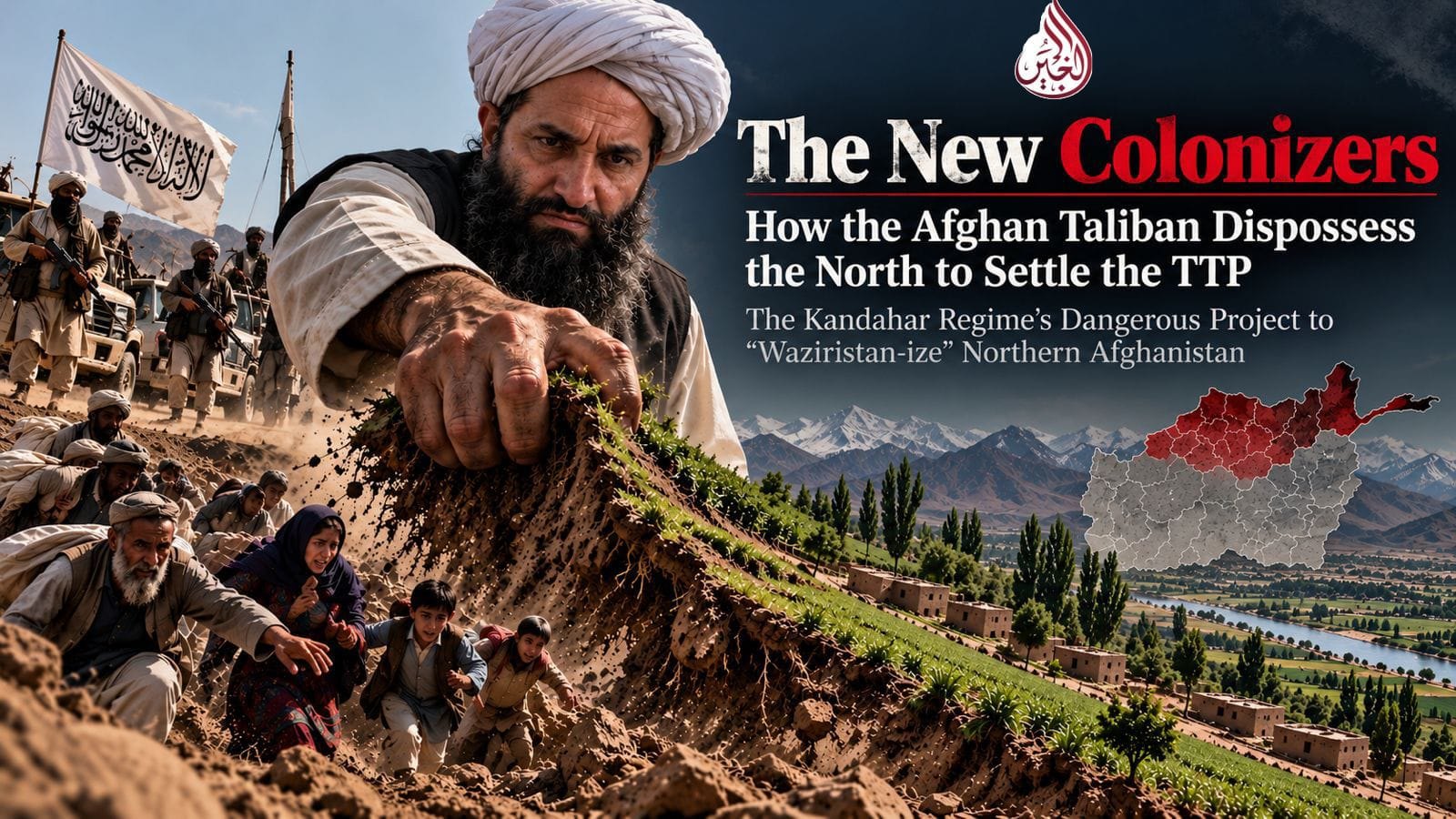
Two structural realities keep this corridor open. First, terrain neutralizes Kabul’s arsenal: above 3,000 meters, captured US Humvees and MRAPs cannot maneuver, while four years without spare parts or avionics maintenance have left Taliban helicopters increasingly grounded. Second, Kandahar provoked its own northern revolt. As Al Khabeer documented in The New Colonizers, Supreme Leader Hibatullah Akhundzada used Official Gazette 1438 to seize ancestral farms in Takhar and the Amu Darya basin to settle TTP families and southern loyalists. Dispossessed Tajik, Uzbek, and Badakhshani villages now shield NRF and HSF cells.
II. Ghosts in Kandahar: Shattering the Southern Myth
Armed opposition has also decentralized far beyond Panjshir into a complementary coalition. While the NRF anchors northern valleys, General Yasin Zia’s Afghanistan Freedom Front (AFF) deploys veteran commandos for night raids in Kabul, Herat, Kunduz, and Taloqan. Former Vice President Amrullah Saleh’s Afghan GreenTrend extracts leaks from Kabul ministries, while Lt. Gen. Sami Sadat’s United Front Afghanistan (AUF) drives strikes southward.
Attack clusters inside Kandahar City and Helmand’s Lashkargah deliver a psychological blow no denial can erase. Strikes in Hibatullah’s ideological sanctuary shatter the myth of monolithic southern loyalty. UNAMA reports rightly note that guerrilla ambushes, grenades, and IEDs cannot yet capture Kabul conventionally—but asymmetric war requires only turning every checkpoint into a liability after dark.
III. Bullets Meet Bandwidth: Inside WeAreNRF’s Diplomatic Siege
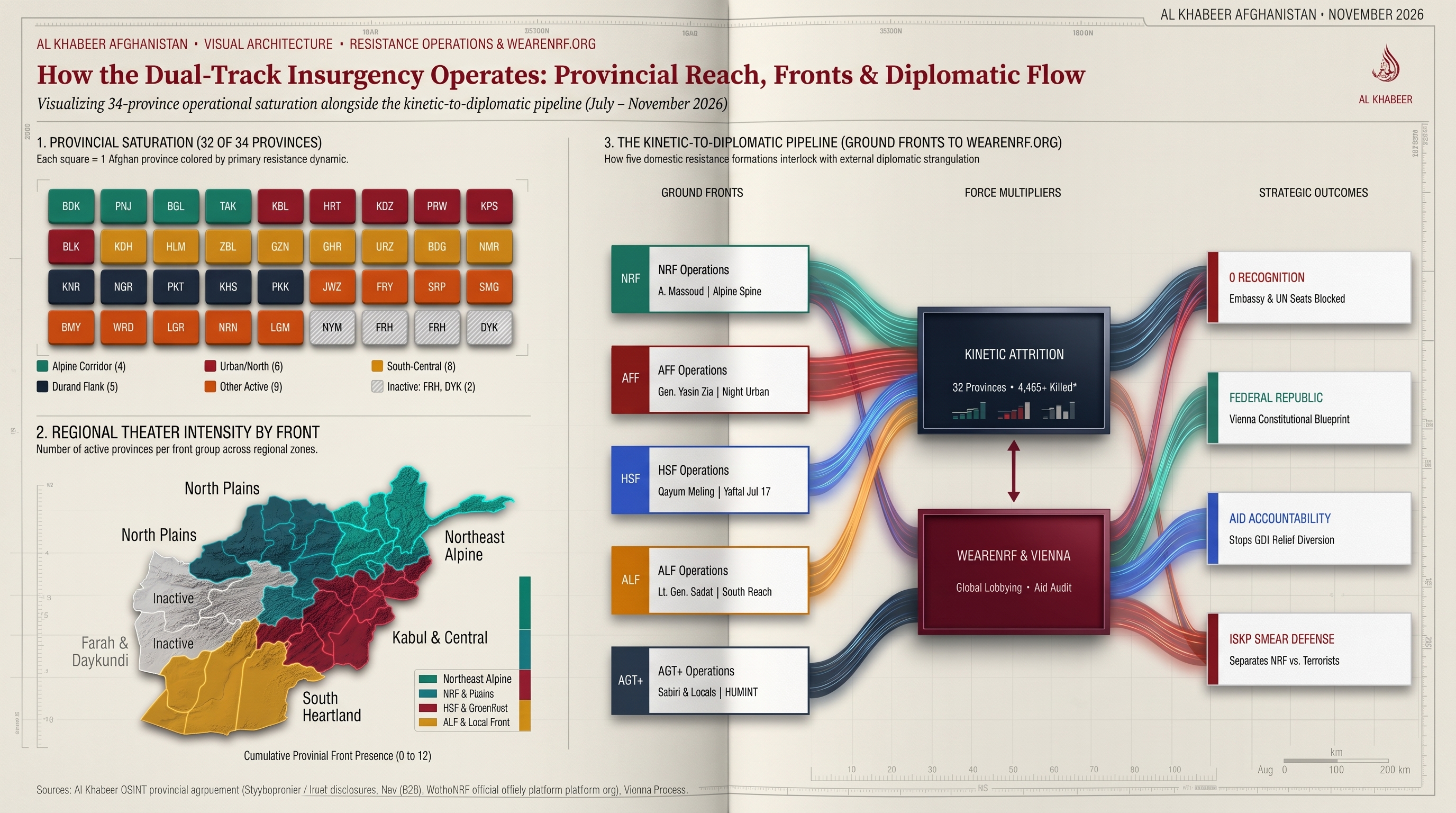
Figure 2: Dual-track strategic architecture pairing armed operations across 32 provinces with the NRF’s international political, aid-auditing, and counter-disinformation offensive.
While guerrilla cells tie down Taliban battalions inside Afghanistan, the NRF’s international platform—anchored through WeAreNRF (wearenrf.org) and the Vienna Process—wages an equally decisive war outside the country. Its objective is structural strangulation: preventing any Western or regional government from granting formal recognition to Kabul.
Through wearenrf.org, the movement runs four clear lines of effort. First, it lobbies European and Western parliaments to keep Taliban diplomatic seats empty and central bank reserves frozen. Second, through the Vienna Process, Ahmad Massoud’s coalition unites opposition figures, civil society, and women’s advocates around a concrete institutional alternative: a federal, decentralized, pluralistic democratic republic ratified via a national Loya Jirga and free elections. Third, it monitors humanitarian aid flows to expose Taliban skimming.
Fourth, it wages sharp information defense. The platform directly refutes two core Taliban smears: proving that the NRF pairs both the Republic tricolor and Northern Alliance banners alongside local ethnic flags rather than pursuing Tajik hegemony, and rejecting the regime’s attempt to conflate historical “Khorasan” identity with ISKP. That defense matters acutely after Al Khabeer exposed in The GDI’s Dirty War how Taliban intelligence contracted ISKP hitmen in Faizabad on October 4, 2026, exploiting communication lag to smear the NRF. Meanwhile, Massoud’s warning to global capitals remains stark: over twenty militant organizations, including TTP, Al-Qaeda, and ISKP, now use Taliban-ruled soil as a sanctuary.
IV. The Two-Front Vise and What Comes Next in 2027
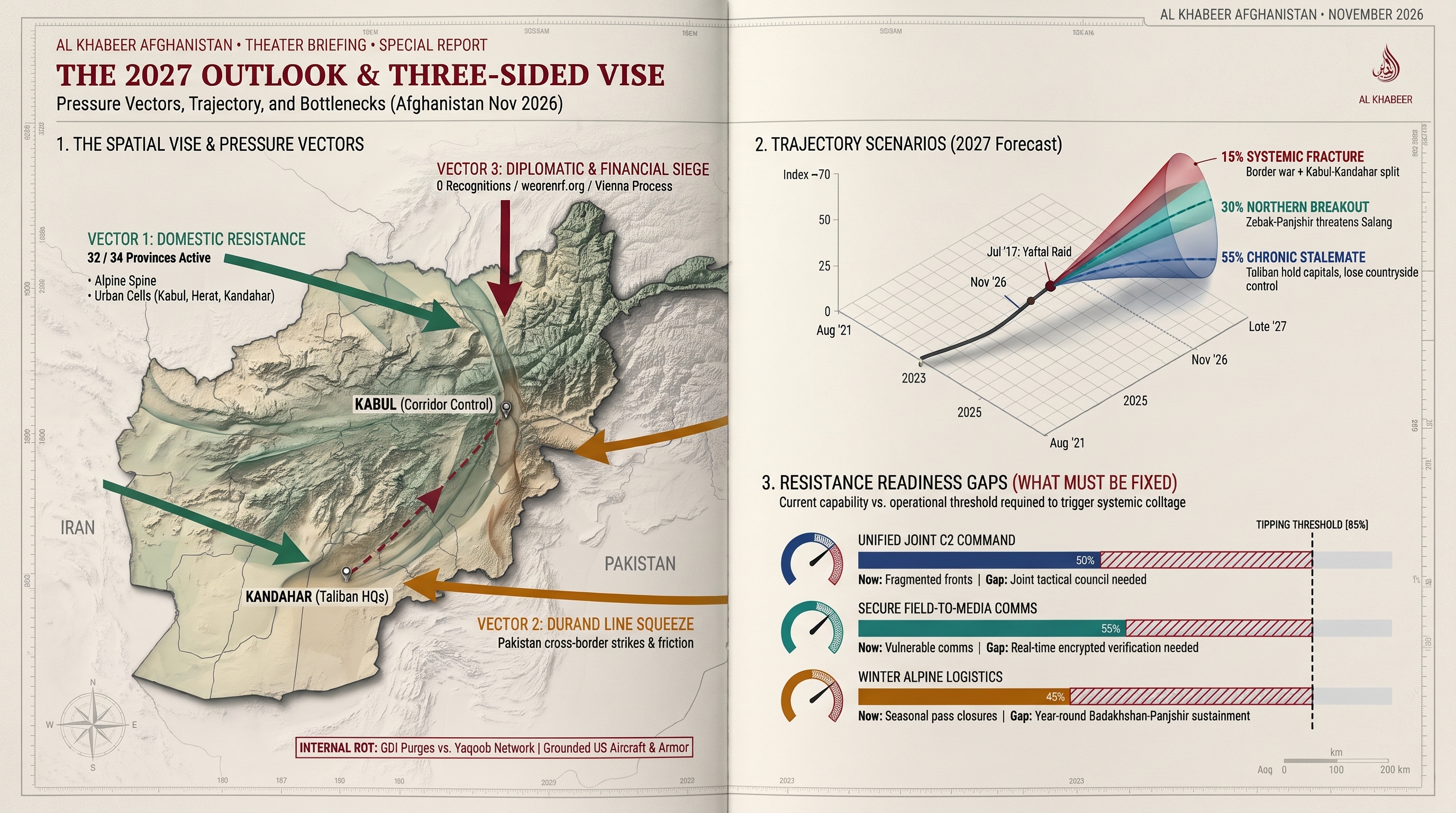
Figure 3: Converging internal, border, and diplomatic pressures on the Taliban Emirate—and three projected operational trajectories for 2027.
The resistance is no longer squeezing Kabul alone. Pakistan’s 2026 backlash against TTP sanctuaries turned the eastern frontier into a second warzone. Following Operation Ghazab Lil Haq and September’s cross-border air strikes across Kunar, Paktika, Kandahar’s PD9, and Gardez’s 203rd Mansouri Corps garrison, Durand Line clashes in Paktia, Khost, and Nangarhar have forced Kabul to shift mobile units east—thinning northern garrisons while Hibatullah’s GDI purges Mullah Mohammad Yaqoob’s network from within.
Into 2027, three trajectories emerge. The base case remains a chronic attrition stalemate where the Taliban hold capitals by day while bleeding financially at night. A higher-escalation path would see resistance forces winterize the Zebak–Yaftal–Panjshir corridor to threaten the Salang Pass by spring. Systemic implosion remains conditional—requiring Durand Line escalation, an open Kandahar–Kabul split, and resistance unity to trigger garrison defections.
Turning momentum into collapse hinges on fixing three bottlenecks: unifying fragmented fronts under one joint tactical command, sealing field-to-media communications lag exploited by the GDI, and surviving winter mountain logistics.
Follow Al Khabeer
Independent reporting on Afghanistan. Follow our work on social media for the latest news, fact checks and analysis.