From Daesh to TTP: What Al-Mirsad Will Not Tell You About the Emirate
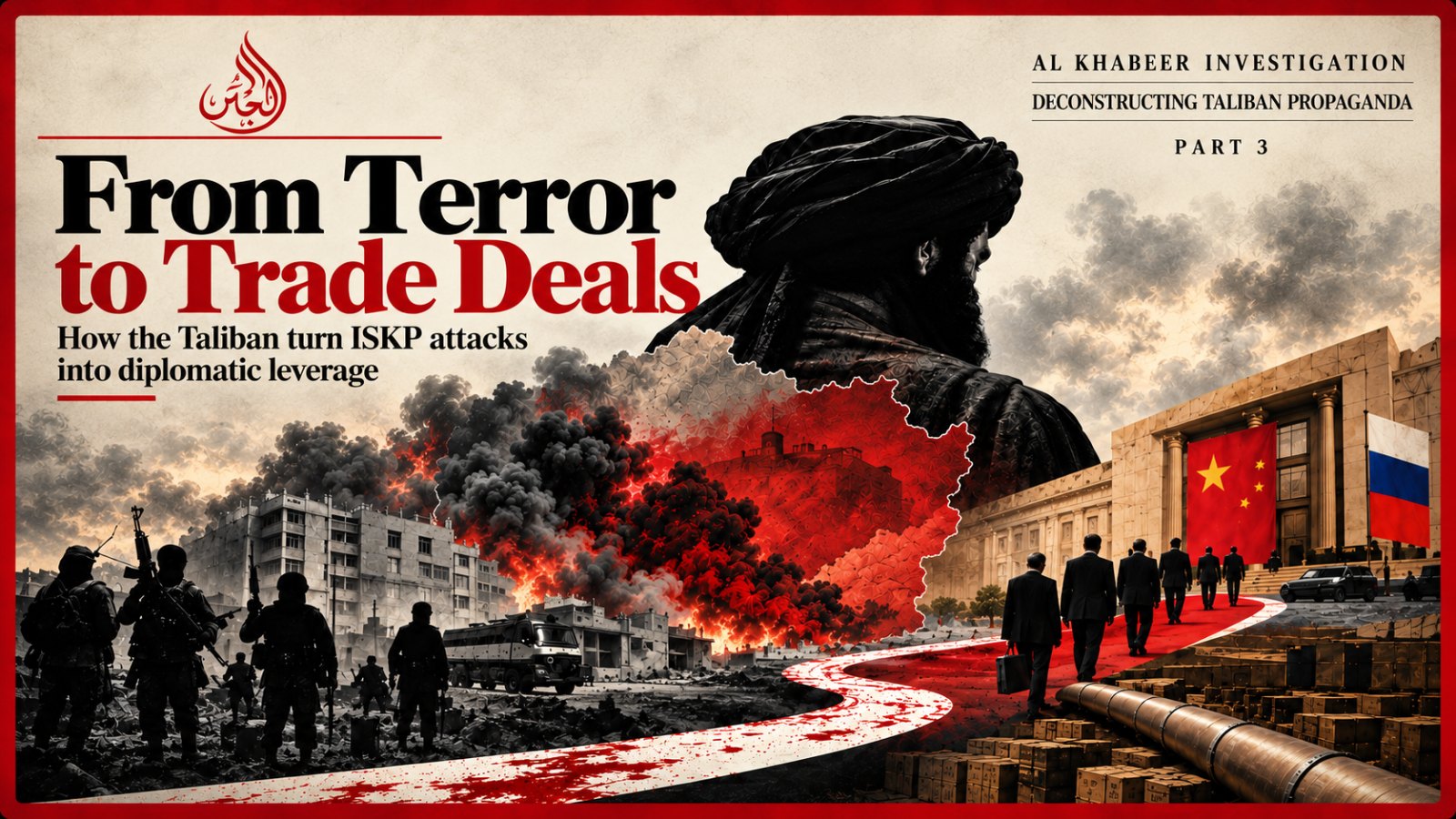
The article argues that ISKP grew from Taliban, TTP and Haqqani networks, while UN reports point to continuing militant support under Taliban rule.
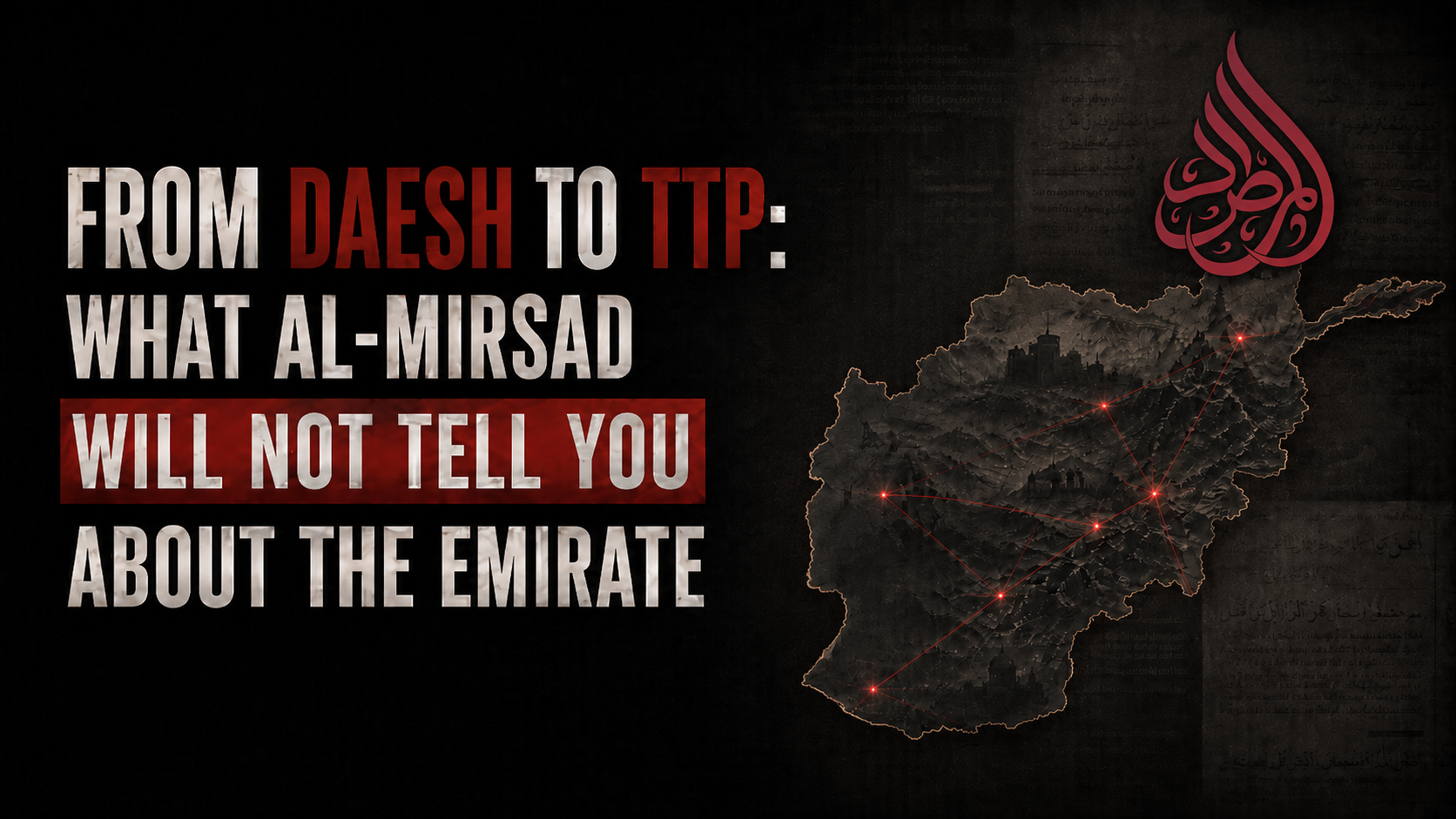
Arsala Hassan’s two-part essay for Al-Mirsad runs to roughly two thousand words. It contains no name, no date, no document, no verifiable incident. It says Pakistan’s army and Daesh murder scholars together, stage attacks together, and operate “thousands of fake social media accounts” together. Then it stops.
Part One instructs its readers: “Before accepting false narratives and rumors, their truth should be examined and verified.” Let us take Al-Mirsad at its own word.
Nobody had to invent Daesh. Your own commanders built it.
Tehrik-e Khilafat was created on 15 July 2014 through the merger of eight armed factions, each led by a serving TTP commander: Hafiz Saeed Khan, Hafiz Dawlat Khan, Gul Zaman Fateh, Mufti Hassan, Khalid Mansoor, Abdul Bahar Mehsud, Abu Bakr, and Shahidullah Shahid, then the TTP’s own spokesman. This early formation, which later fed directly into Wilayat Khorasan, is important because it shows that the organization did not emerge in isolation; its founding leadership came from within the wider Taliban militant ecosystem Hafiz Saeed Khan, a front-runner to lead the TTP itself after Hakimullah Mehsud’s death, became the first governor of Wilayat Khorasan on 26 January 2015.
In Afghanistan, the pattern was identical. Daesh’s first named deputy there was Mullah Abdul Rauf Khadim, a Taliban commander held at Guantánamo and released in 2007, who returned to the Taliban before joining Daesh.
No foreign hand had to recruit these men. They walked out of the Emirate and the TTP on their own feet. If Daesh is a foreign project, explain why it could only be staffed from the Taliban’s own ranks.
It was born inside the Islamic Emirate.
One of the four founding component groups of Daesh in Afghanistan was led by Azizullah Haqqani, a sitting member of the Taliban Shura, the Haqqani network’s leadership council, and head of its Fedayin Commission, the network’s suicide-attack arm. He pledged to Baghdadi on 11 August 2014 with roughly 600 men, and drew in about ten Haqqani field commanders, including the network’s military leaders for Paktia and Sabari (Giustozzi, pp. 25, 29).
Sirajuddin Haqqani knew. He allowed Azizullah to hold all three positions at once until autumn 2016: Daesh component-group leader, member of the Miran Shah Shura, chief of the Fedayin Commission. And across his entire tenure as deputy of the Quetta Shura from August 2015, Sirajuddin “threatened military operations against IS-K, but never ordered one” (p. 178). That man is today the Islamic Emirate’s Minister of Interior.
Then the Emirate lost control of its own house.
The story does not stop in 2016. In February 2021, the UN Monitoring Team reported that Member States assessed the new emir of Daesh in Khorasan, Shahab al-Muhajir, to be a former mid-level commander of the Haqqani network who continued to supply Daesh with “key expertise and access to networks.” The Monitoring Team said it could not confirm the assessment. Al-Mirsad has never attempted to rebut it either.
In July 2024, the same body went further. Its report to the Security Council, document S/2024/499, states at paragraph 47 that Daesh operatives “were reported to have successfully infiltrated the main ministries of the de facto authorities (Ministry of Interior, Defence and General Directorate of Intelligence).”
The Ministry of Interior is Sirajuddin Haqqani’s ministry. A second UN report that same month, S/2024/556, records at paragraph 80 that a Libyan Al-Qaida figure, Abdelazim Ben Ali, “is an adviser of the Taliban Acting Minister of the Interior, Sirajuddin Haqqani.”
Al-Mirsad wants its readers staring at Rawalpindi. The Security Council is looking at Kabul.
How Daesh learned to bomb Kabul
In November 2016, 150 Haqqani network operatives working in Kabul crossed over to Daesh, a defection the Haqqanis themselves admitted. They carried across the one capability Daesh had never managed to build: the Haqqanis held “the best expertise within the Taliban in carrying out complex operations in Kabul.” That year Daesh doubled the budget of its martyrdom department from $10 million to $20 million (Giustozzi, p. 109).
Everything that followed in Kabul rests on that transfer. On 11 August 2022 a Daesh bomber killed Sheikh Rahimullah Haqqani, one of the Emirate’s most senior clerics and among its loudest voices against Daesh, using explosives concealed in a prosthetic leg inside his own seminary. On 11 December 2024 a Daesh bomber killed Khalil ur-Rahman Haqqani, the Emirate’s acting Minister for Refugees and Sirajuddin’s own uncle, outside his ministry in Kabul. Al-Mirsad might tell its readers where those bombers learned the trade.
Ask Daesh who helped it.
Al-Mirsad presents Daesh as the Emirate’s mortal enemy. Its own cadres said something different. A senior Tehrik-e Khilafat figure, late 2014: “We have a good relationship with the Afghan Taliban ” Another, in the same period: “Whenever we want to do operations in Afghanistan, Haqqani network and Peshawar Shura support us a lot” (p. 175).
Giustozzi’s assessment of early 2017: “Large portions of the Taliban have never fought IS-K: the Shura of the North and the Haqqanis in particular” (p. 192).
What the Security Council has on file.
The same 8 July 2024 report finds the TTP the largest terrorist group in Afghanistan at 6,000 to 6,500 fighters; records a Member State’s documentation of the Emirate paying 3.5 million afghanis, roughly $50,500, a month to TTP emir Noor Wali Mehsud; counts TTP attacks on Pakistan rising from 573 in 2021 to 1,210 in 2023; and finds that Daesh recruits by “attracting members from other terrorist groups and the Taliban.” The Team’s thirty-eighth report, S/2026/651, records that the de facto authorities “continued their support” to the TTP.
Al-Mirsad has never asked its readers to weigh one of those paragraphs. They describe Kabul.
Who is actually killing the ulema.
Al-Mirsad claims that Pakistan and Daesh jointly target ulema. The record points in the opposite direction. Daesh has repeatedly killed scholars who openly supported Pakistan and its institutions. In July 2023, an ISKP bomber attacked a JUI-F convention in Bajaur, killing at least 54 people. In February 2025, another Daesh bomber killed Maulana Hamid ul Haq at Darul Uloom Haqqania. The case of Maulana Muhammad Idris Tarangzai is even more striking. Shortly before his assassination, he delivered a sermon praising Pakistan and its Army Chief, Field Marshal, after which Taliban-aligned social-media accounts heavily attacked him. Days later, ISKP killed him in Charsadda and claimed responsibility. The pattern is difficult to dismiss. Scholars who openly support Pakistan are first subjected to sustained hostility from Taliban-aligned circles and are then targeted by Daesh. This raises the possibility that Daesh functions as a deniable instrument inside the Islamic Emirate’s security environment: when the Taliban cannot openly eliminate a critic or opponent, Daesh can do the dirty work while providing distance and plausible deniability.
Who freed the bomber, and who caught the planner.
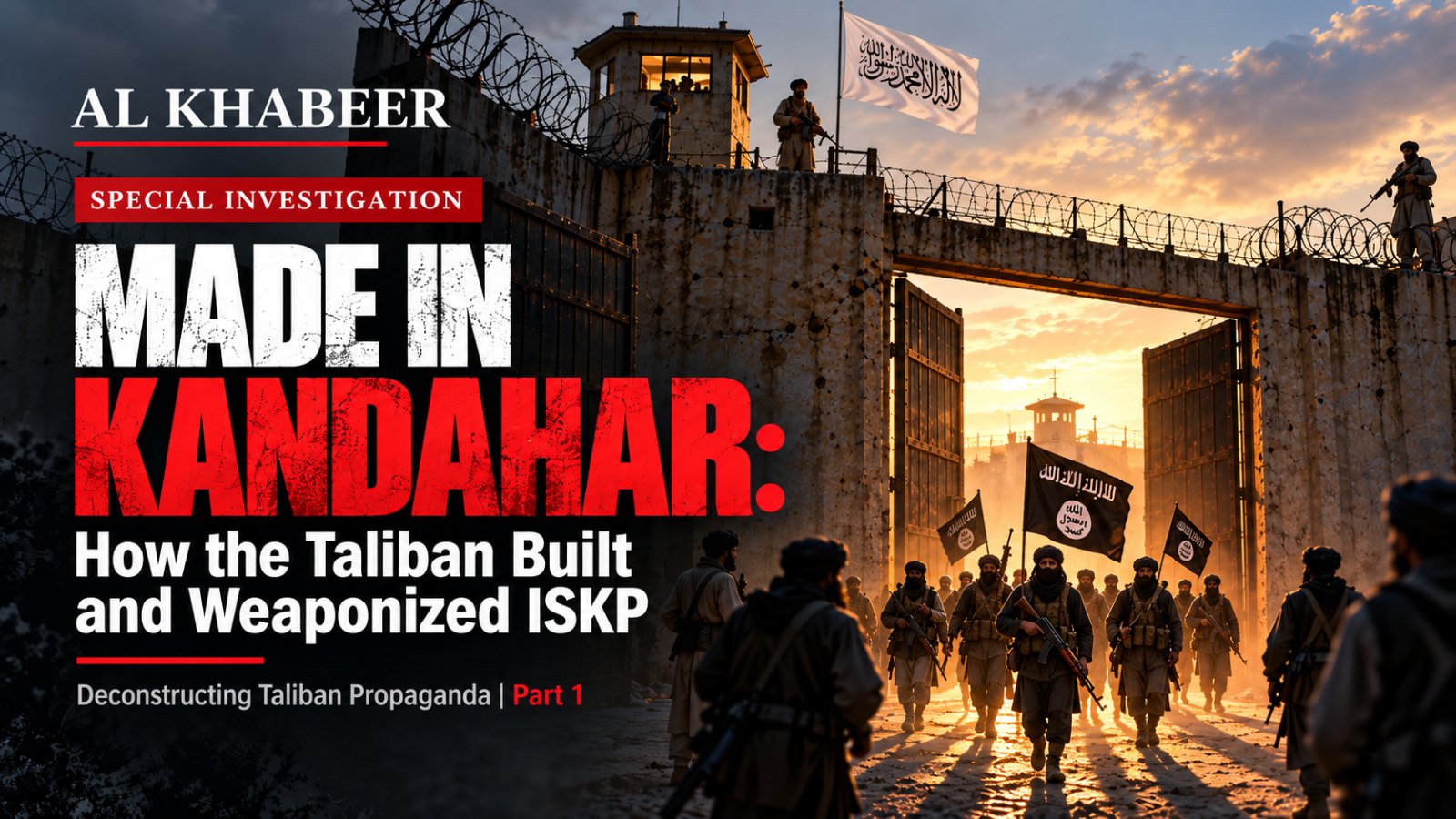
Abdul Rahman al-Logari, who bombed Abbey Gate, walked free along with 1100 ISK operatives when the Emirate opened Afghanistan’s prisons in August 2021. Mohammad Sharifullah, who admitted to the US Justice Department that he scouted the route for that attack and later trained the Crocus City Hall gunmen, was arrested by Pakistan and handed to Washington in March 2025. The Emirate gave that network its liberty. Pakistan put it in chains.
Al-Mirsad asks its readers to verify claims before accepting them. That standard should apply to Al-Mirsad as well. The record shows that ISKP emerged from TTP, Taliban and Haqqani-linked militant networks, while Afghanistan still hosts terrorist groups that the UN says receive varying degrees of freedom, support or patronage under the Taliban authorities. In February 2026, the UN reported that no Member State accepted the Taliban's claim that Afghanistan contained no terrorist groups, while TTP continued to receive greater liberty and support and al-Qaeda continued to enjoy Taliban patronage.
Follow Al Khabeer
Independent reporting on Afghanistan. Follow our work on social media for the latest news, fact checks and analysis.